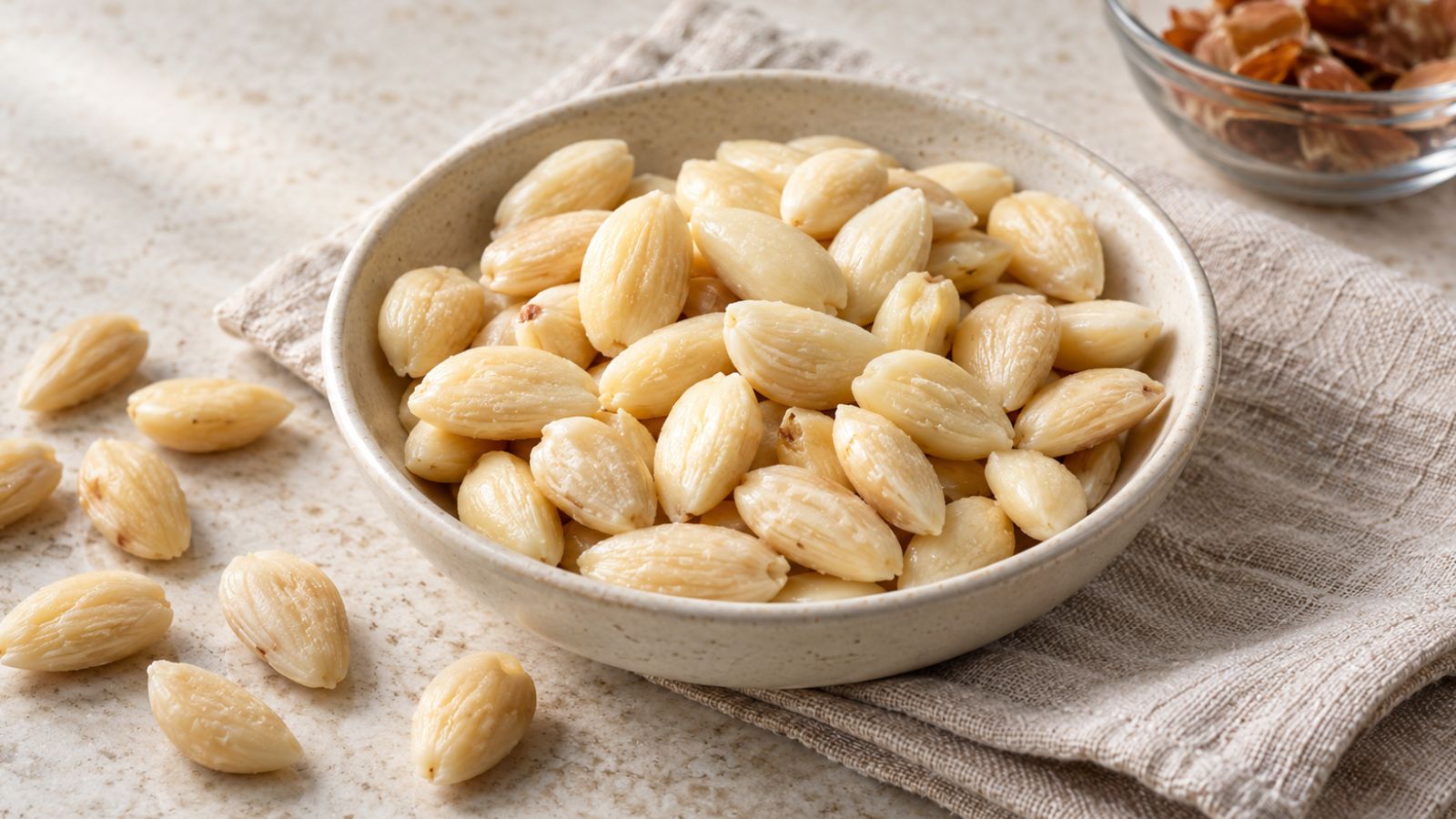
If you’ve ever wondered how to blanch almonds, you’ll be surprised by how simple the process is. With whole raw almonds, boiling water, and a bowl of cold water, you can loosen the brown skins so they slip off with a gentle squeeze. The result is a batch of pale, peeled almonds ready for your favorite recipes.
Blanched almonds are useful for cookies, cakes, homemade almond flour, and almond paste, especially when you want a smooth texture and a light color without flecks of skin. In this step-by-step guide, I’ll show you how to blanch, peel, and dry almonds at home, with photos to help you follow each stage.
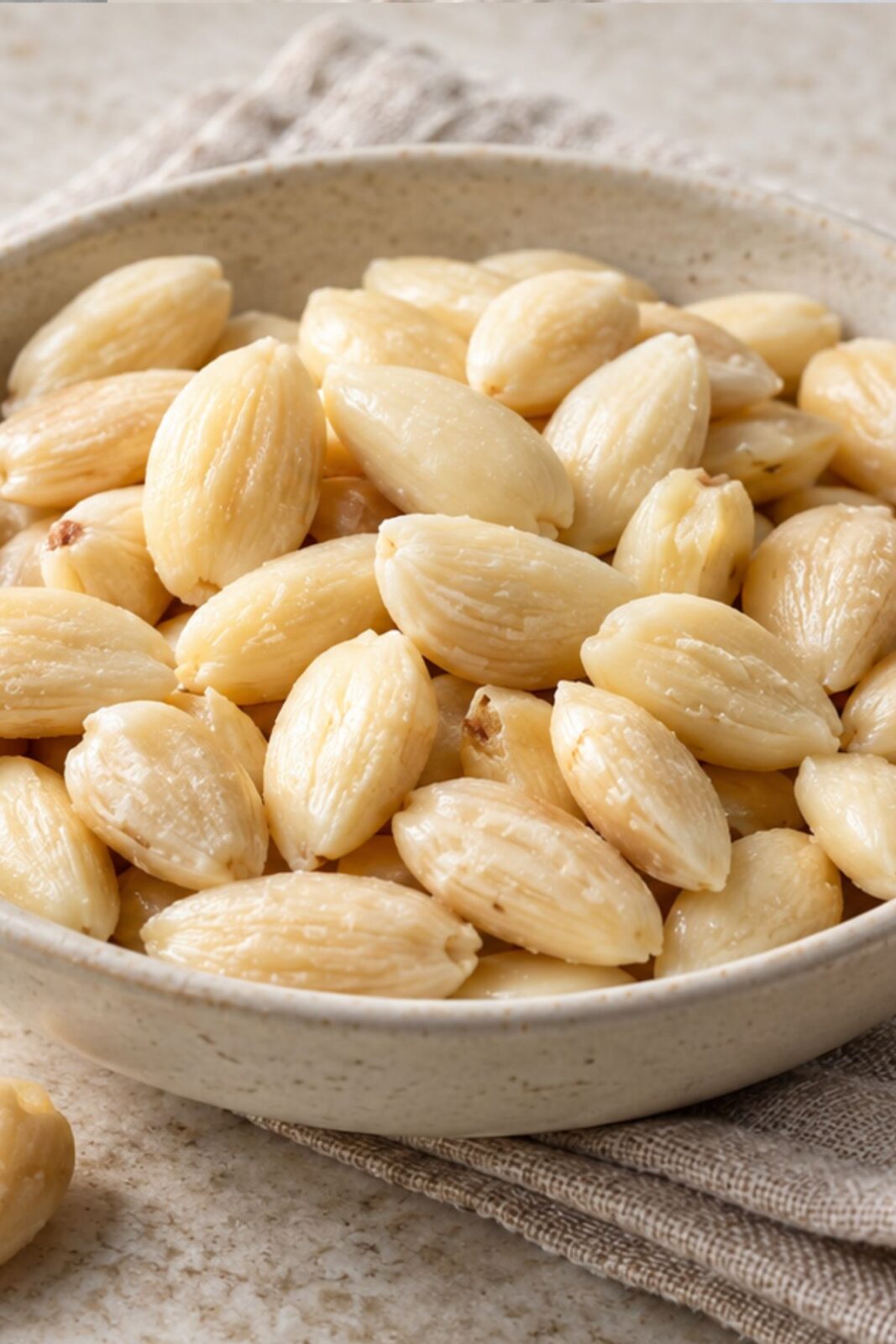
Knowing how to blanch almonds is a useful kitchen skill whenever a recipe calls for peeled nuts. Removing the skins gives almonds a lighter appearance and a milder flavor, which works especially well in delicate desserts. Once completely dry, you can finely chop them and use them instead of cashews in my Cashew Meltaway Cookies for a simple almond variation.
The key is to keep the time in hot water brief, then cool the almonds immediately so you can handle them comfortably. As explained in Serious Eats’ guide to blanching almonds, hot water loosens the skins, allowing them to slip off with gentle pressure. Below, I’ll walk you through my saucepan method, followed by peeling and drying, with photos of each stage.
What Are Blanched Almonds?
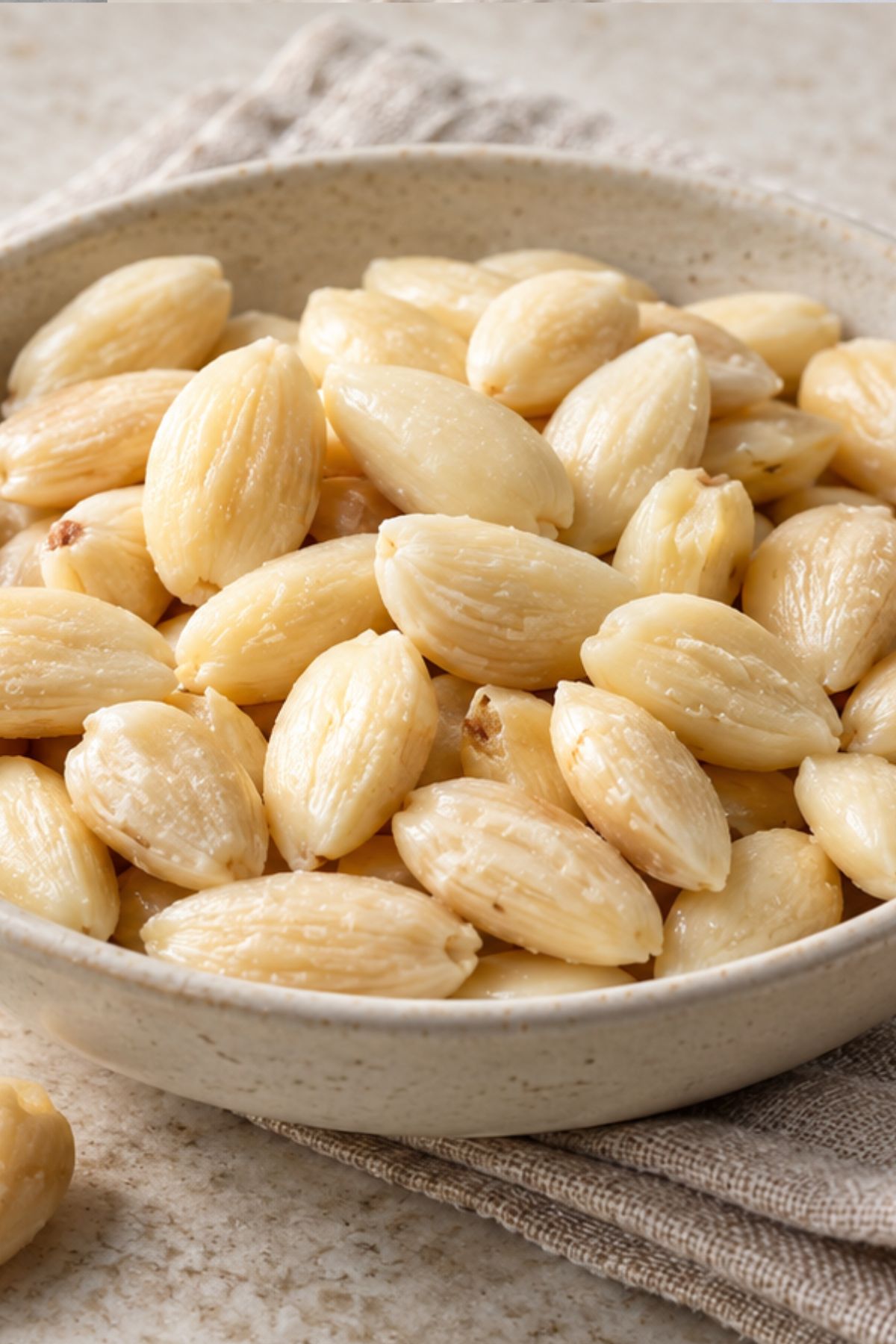
Blanched almonds are whole almonds with their thin brown skins removed. A brief dip in boiling water loosens the skins, making them easy to slip off after the almonds are cooled in cold water. The peeled almonds have a pale ivory color and a milder flavor than almonds with their skins on.
Removing the skins is especially useful when you want a light-colored finish without brown flecks, such as in homemade almond flour, almond paste, marzipan, or delicate cookies. Almonds with their skins on are still suitable for many recipes, so blanching is only necessary when the recipe calls for it or when you prefer peeled almonds.
Blanched almonds are different from roasted almonds. Blanching removes the skins; roasting develops a toasted flavor and golden color. After blanching, dry the almonds thoroughly before grinding them or storing them for later.
What You’ll Need
You only need whole raw almonds and water, plus a few basic kitchen tools. You can blanch a small handful or a larger batch—just use enough water to cover the almonds completely.
- Whole raw almonds with skins on: Choose plain, unsalted almonds that have not been roasted.
- Water for boiling: Enough to fully cover the almonds in your saucepan.
- A bowl of cold water: Prepare it before you begin so you can cool the almonds immediately after blanching.
For equipment, have a small saucepan, a strainer or slotted spoon, and paper towels or a clean kitchen towel ready. If you prefer to dry the peeled almonds in the oven, you’ll also need a baking sheet.
Having everything within reach makes it easy to move the almonds from hot water to cold water without delay.
How to Blanch Almonds
Learning how to blanch almonds is easy once everything is ready. Keep the time in boiling water short, cool the almonds immediately, and peel them while the skins are still loose.
Step 1: Prepare the Water
Fill a small saucepan with enough water to cover the almonds completely. Place it over medium-high heat and bring the water to a boil.
While the water heats, prepare a bowl of cold water and set it beside the stove. Have a strainer or slotted spoon ready so you can remove the almonds quickly.
Step 2: Blanch the Almonds
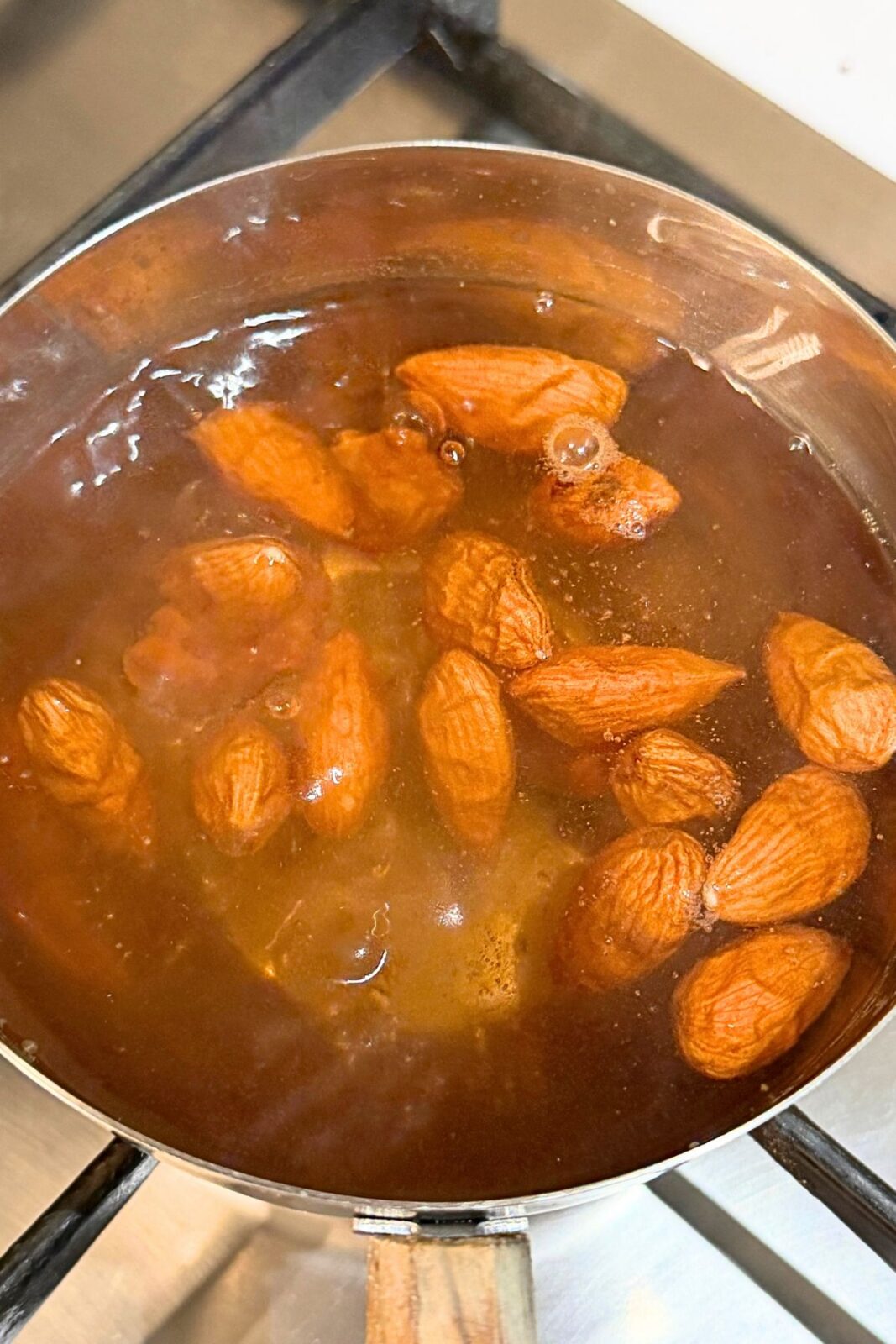
Carefully add the whole raw almonds to the boiling water and let them blanch for about 1 minute. Keep this step brief so the almonds do not become too soft.
The hot water loosens the brown skins. Use the cooking time as your guide rather than waiting for every almond to float to the surface.
Step 3: Transfer to Cold Water
Immediately drain the almonds in a strainer, or lift them out with a slotted spoon, and transfer them to the prepared bowl of cold water.
Let them cool just until they are comfortable to handle. There is no need to leave them soaking for a long time.
Step 4: Slip Off the Skins
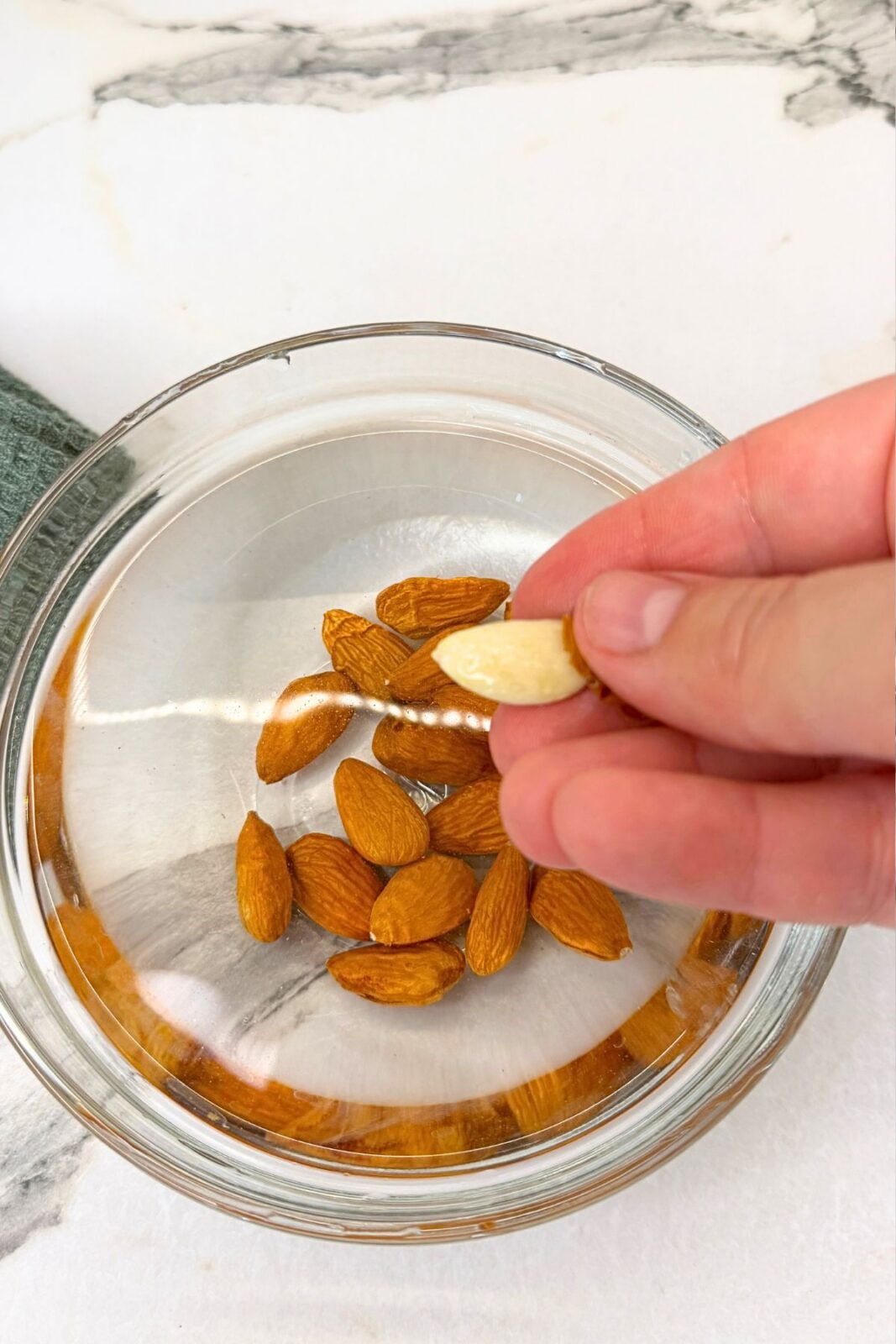
Take one almond from the cold water and hold it between your thumb and forefinger. Gently squeeze the wider end-the almond should slide out of its loosened skin.
Work over a bowl because the peeled almonds can pop out quickly! Repeat with the remaining almonds, keeping the peeled nuts separate from the discarded skins.
Step 5: Dry the Peeled Almonds
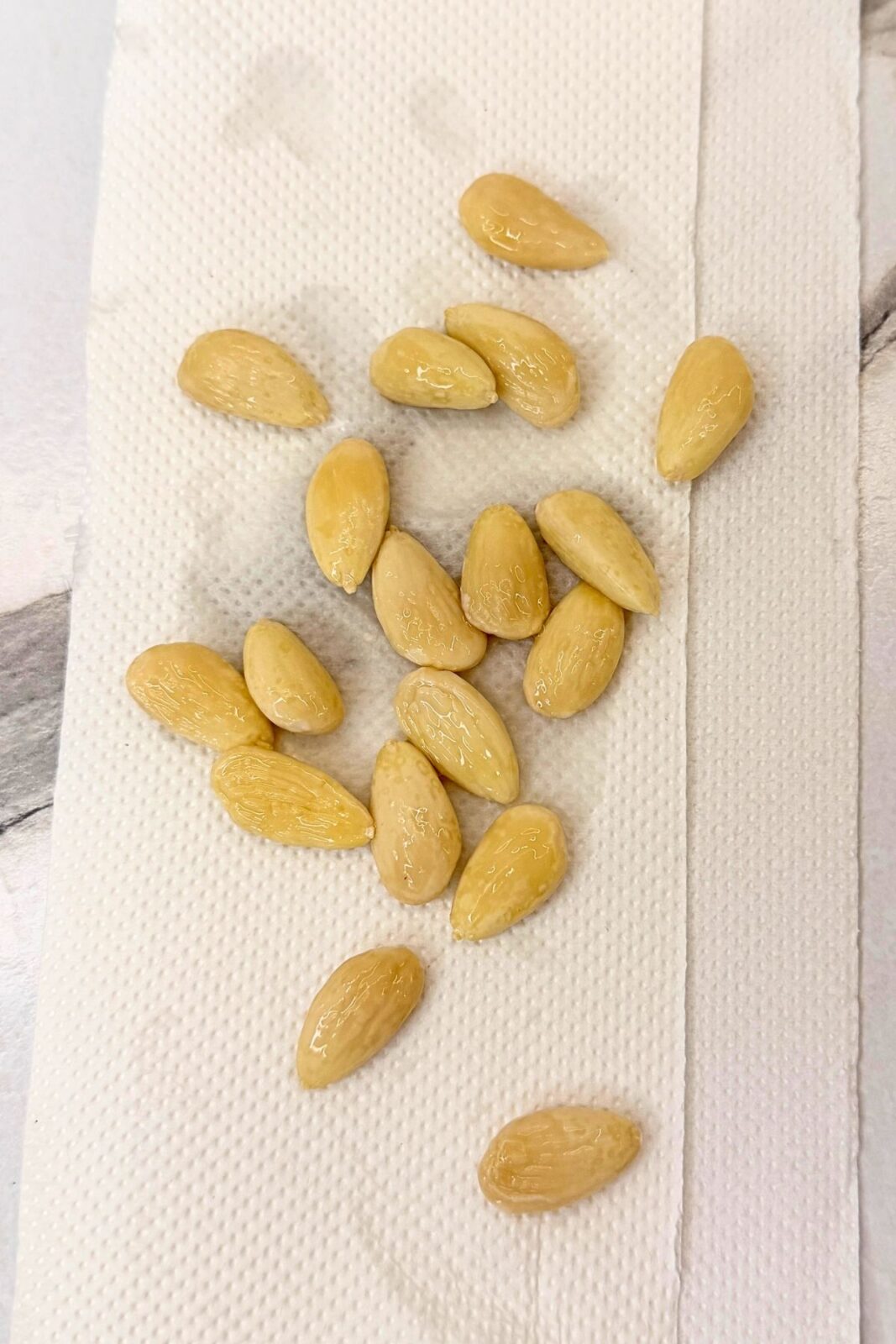
Spread the blanched almonds in a single layer on paper towels or a clean kitchen towel. Gently pat them dry, then allow the remaining moisture to evaporate.
For faster drying, you can use a low oven, as explained in the next section. Dry the almonds thoroughly before grinding or storing them, and let oven-dried almonds cool completely before placing them in a container.
How to Store and Freeze
Once you know how to blanch almonds, you can prepare them ahead and keep them ready for your favorite recipes. Always let the peeled almonds dry completely before storing them. If you dried them in the oven, allow them to cool fully first.
- Refrigerator: Store the completely dried blanched almonds in an airtight container in the refrigerator for up to 2 weeks. Keep the container tightly sealed to protect them from moisture and other food odors.
- Freezer: Place the dry almonds in a freezer-safe bag or container and freeze for up to 3 months for the best quality. Remove excess air from the bag and label it with the date.
- Thawing: Let the almonds come to room temperature in their sealed container before opening. Check that they are completely dry before grinding them into almond flour.
Tip: Freeze blanched almonds in small portions so you can take out just the amount you need for baking.
Frequently Asked Questions (FAQ)
How long should I blanch almonds?
Blanch whole raw almonds in boiling water for about 1 minute, then immediately transfer them to cold water. When learning how to blanch almonds, keeping this step brief is important-too much time in hot water can soften the nuts.
Do almonds need to float before I remove them?
No. Use the blanching time as your guide rather than waiting for the almonds to float. After about 1 minute, remove them, cool them in cold water, and check that the skins slip off easily.
Can I use roasted or salted almonds?
For this method, use whole raw, unsalted almonds with their skins on. Roasted almonds may be harder to peel, and blanching can affect their toasted texture and flavor.
Why won’t the almond skins come off easily?
The skins may not have loosened enough during blanching. Return the stubborn almonds to hot water briefly, then cool them again and test one. Squeeze gently from the wider end rather than trying to scrape away the skin.
Do I need ice water to cool the almonds?
No, a bowl of cold water works well. Prepare it before you begin so you can transfer the almonds immediately after blanching. If the water becomes warm, replace it with fresh cold water.
Can I make almond flour from blanched almonds?
Yes! Once you know how to blanch almonds, you can use the peeled nuts to make homemade almond flour. Dry them completely, then pulse them in a food processor or blender until finely ground. Avoid processing continuously, as the almonds can release their oils and turn into almond butter.
Do blanched almonds need to be completely dry?
Yes, especially before storing or grinding them. Patting with a towel removes surface water, but the almonds may still need more drying time. Remaining moisture can cause the ground almonds to clump and reduce their storage life.
Can I blanch almonds ahead of time?
Yes. Once completely dry and cool, store them in an airtight container in the refrigerator for up to 2 weeks, or freeze them for up to 3 months for the best quality.
Nutrition per Serving
The approximate nutrition information for 1 serving of plain, fully dried blanched almonds (about 1 oz / 28 g) is:
- Calories: 165 kcal
- Carbohydrates: 5.2 g
- Protein: 6 g
- Fat: 14.7 g
- Saturated Fat: 1.1 g
- Cholesterol: 0 mg
- Sodium: 5 mg
- Fiber: 2.8 g
- Sugar: 1.3 g
Nutrition values are estimates based on standard blanched almond data and may vary depending on the almonds, drying method, and serving size.
Conclusion
Learning how to blanch almonds is a simple kitchen skill that comes in handy whenever a recipe calls for peeled nuts. With a brief blanch in boiling water, quick cooling, and a gentle squeeze, you can remove the skins and prepare almonds for your next baking project.
Once completely dry, use them in cookies, cakes, homemade almond flour, or almond paste. You can also chop them and use them as part of the nut filling in my Baklava Recipe for a delicious almond variation.
Now that you know how to blanch almonds, you can prepare just the amount you need or save a batch for later. If you try this method, leave a comment below—I’d love to hear what you make with your blanched almonds!
Happy baking!

How to Blanch Almonds
Ingredients
Equipment
Method
- Prepare the cold water: Fill a bowl with cold water and set it beside the stove. Have a strainer or slotted spoon ready.
- Boil the water: Fill a small saucepan with enough water to cover the almonds completely. Bring to a boil over medium-high heat.
- Blanch the almonds: Carefully add the raw almonds to the boiling water. Blanch for about 1 minute to loosen the skins. Avoid prolonged boiling, which can soften the almonds.
- Drain and cool: Immediately drain the almonds in a strainer, or lift them out with a slotted spoon, and transfer them to the bowl of cold water. Cool just until comfortable to handle.
- Remove the skins: Hold each almond between your thumb and forefinger and gently squeeze the wider end. The almond should slide out of its brown skin. Work over a bowl to catch the peeled nuts.
- Dry the almonds: Spread the peeled almonds in a single layer on paper towels or a clean kitchen towel. Pat dry, then leave until completely dry. For faster drying, use the oven method in the notes.
- Use or store: Once fully dry and cool, use the almonds in your recipe or transfer them to an airtight container for storage.
Notes
- Adjust the quantity: Blanch as many almonds as needed. For larger quantities, work in batches and use enough water to cover each batch.
- Timing: Use approximately 1 minute as your guide rather than waiting for the almonds to float.
- Easy peeling: Peel soon after cooling, while the skins are still loose.
- Oven drying: Spread the peeled almonds on a baking sheet and dry at approximately 210°F (100°C). Start checking after 10–15 minutes and continue as needed until completely dry. Keep them pale and allow them to cool fully before storing.
- Refrigerator: Store completely dried almonds in an airtight container for up to 2 weeks.
- Freezer: Freeze in a sealed freezer-safe bag or container for up to 3 months for the best quality.
- Nutrition: Values are estimated per 28 g of fully dried blanched almonds. The finished yield depends on the almonds and drying method.