
Ingredients
Equipment
Method
Activate the Yeast
- Pour the lukewarm water into a large mixing bowl. Add the sugar, active dry yeast, and 1 tablespoon of flour taken from the measured amount. Stir until smooth, cover with a clean kitchen towel, and let the mixture rest for about 10 minutes, or until foamy and bubbly.
Add the Flour and Salt
- Stir the activated yeast mixture. Add the remaining flour and salt, then mix with a wooden spoon until a rough dough begins to form.
Knead the Dough
- Use your hand to knead the dough directly in the bowl for several minutes, until the flour is fully incorporated. The dough should remain very soft and sticky. Do not add too much additional flour or make the dough stiff.
Complete the First Rise
- Cover the bowl with a clean kitchen towel and leave the dough in a warm place for 1 hour, or until it has noticeably increased in size.
Fold the Dough
- Gently knead or fold the risen dough several times directly in the bowl to release some of the air.
Complete the Second Rise
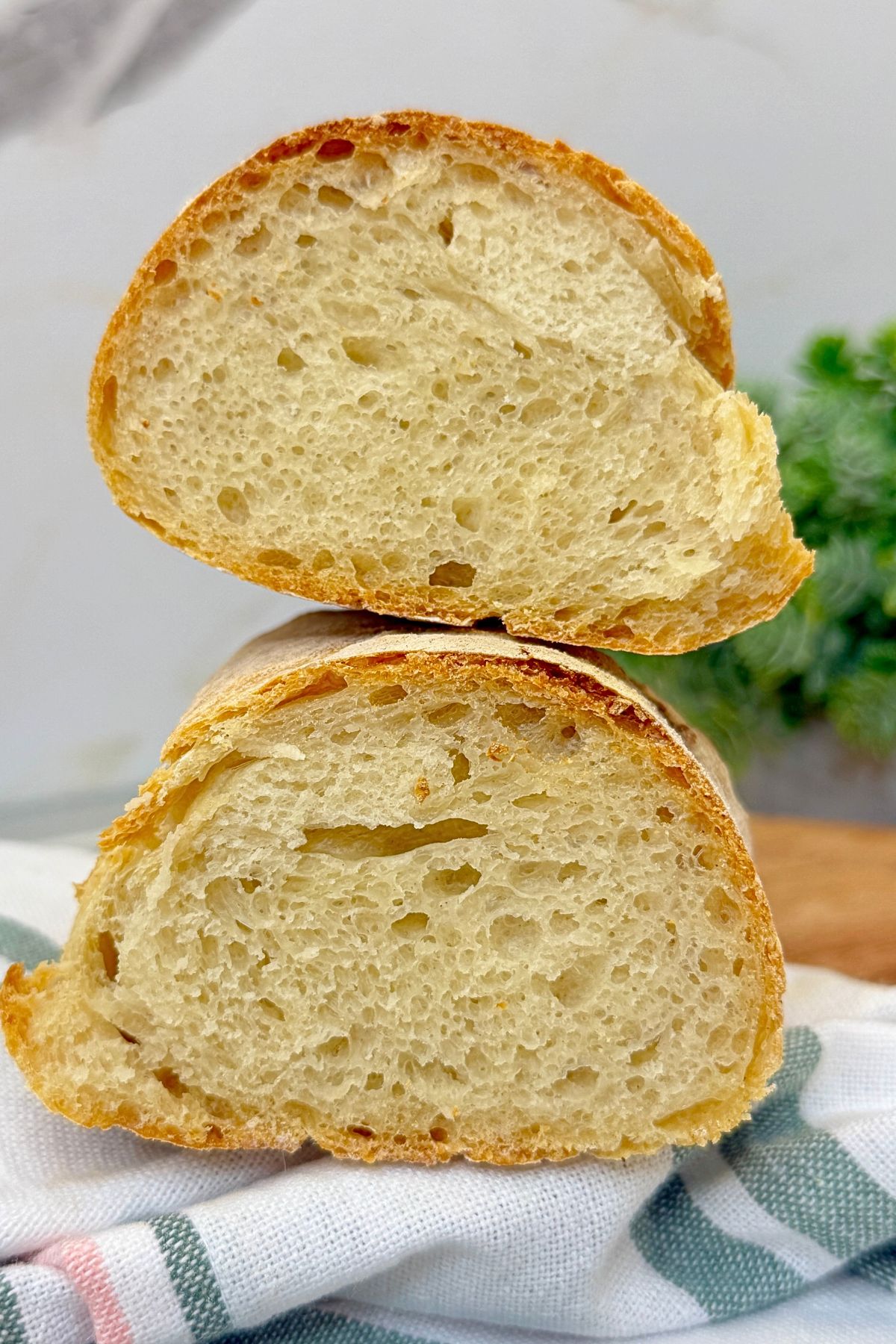
- Cover the bowl again and let the dough rise for another hour. It should become puffy, airy, and filled with small bubbles.
Prepare for Baking
- Preheat the oven to 400°F (200°C). Line a large baking sheet with parchment paper and generously flour the work surface.
Divide and Shape
- Carefully turn the risen dough onto the floured surface without kneading it again. Divide it into two equal portions using a bench scraper. With lightly floured hands and the bench scraper, gently shape each portion into a long rustic loaf.
Score and Bake
- Transfer the loaves to the prepared baking sheet. Make several diagonal cuts across the tops with a sharp knife or bread lame. Bake for about 30 minutes, or until the loaves have a crisp, golden crust and sound hollow when tapped on the bottom.
Cool and Serve
- Remove the baked loaves from the oven and transfer them to a wire rack. Let them cool before slicing and serving.
Notes
- The water should feel pleasantly warm, never hot. Water that is too hot can damage the yeast.
- The dough is meant to be very soft and sticky. Avoid adding excessive flour.
- Rising time may vary depending on the temperature of your kitchen. Look for a noticeable increase in size rather than relying only on the clock.
- Handle the dough gently after the second rise to preserve the air bubbles.
- Allow the bread to cool before slicing so the soft center can finish setting.
- Store cooled bread at room temperature for up to 3 days or freeze it for up to 3 months.