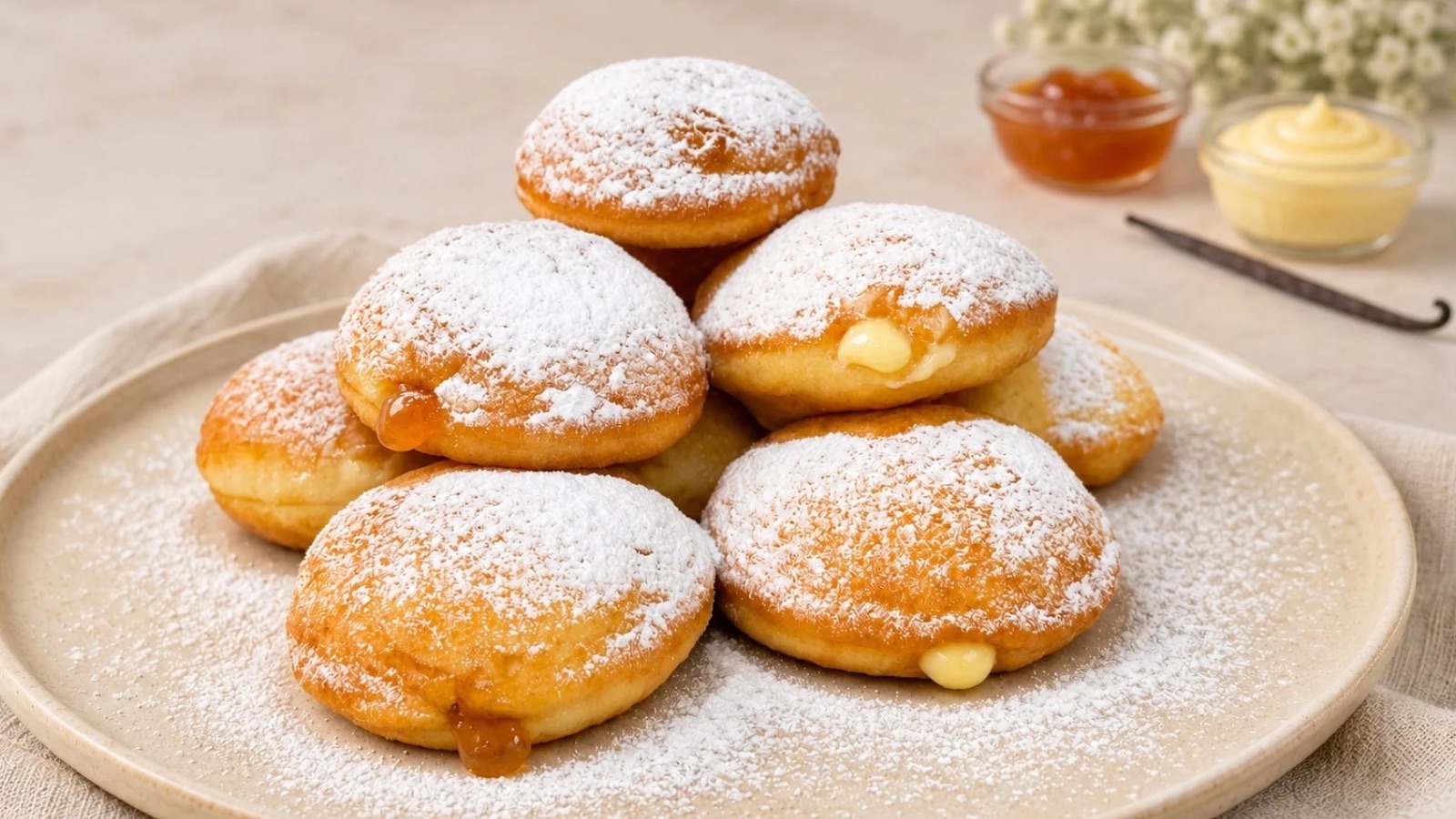
These cream and jam filled doughnuts have everything I love about a homemade sweet treat: a golden outside, a soft, airy center, and a generous filling tucked into every bite. A light dusting of powdered sugar finishes them beautifully, whether you choose smooth vanilla cream or fruity apricot jam.
For this batch, I made both versions because choosing just one filling felt impossible. The vanilla cream makes each bite rich and creamy, while the apricot jam adds a bright, slightly tangy sweetness that pairs beautifully with the tender yeast dough.
There’s something especially satisfying about watching rounds of dough puff up in the pan and turn golden. Then comes the best part: filling the cooled doughnuts and bringing a freshly powdered plate to the table. Serve them for a weekend breakfast, an afternoon coffee break, or simply because you feel like making something special.
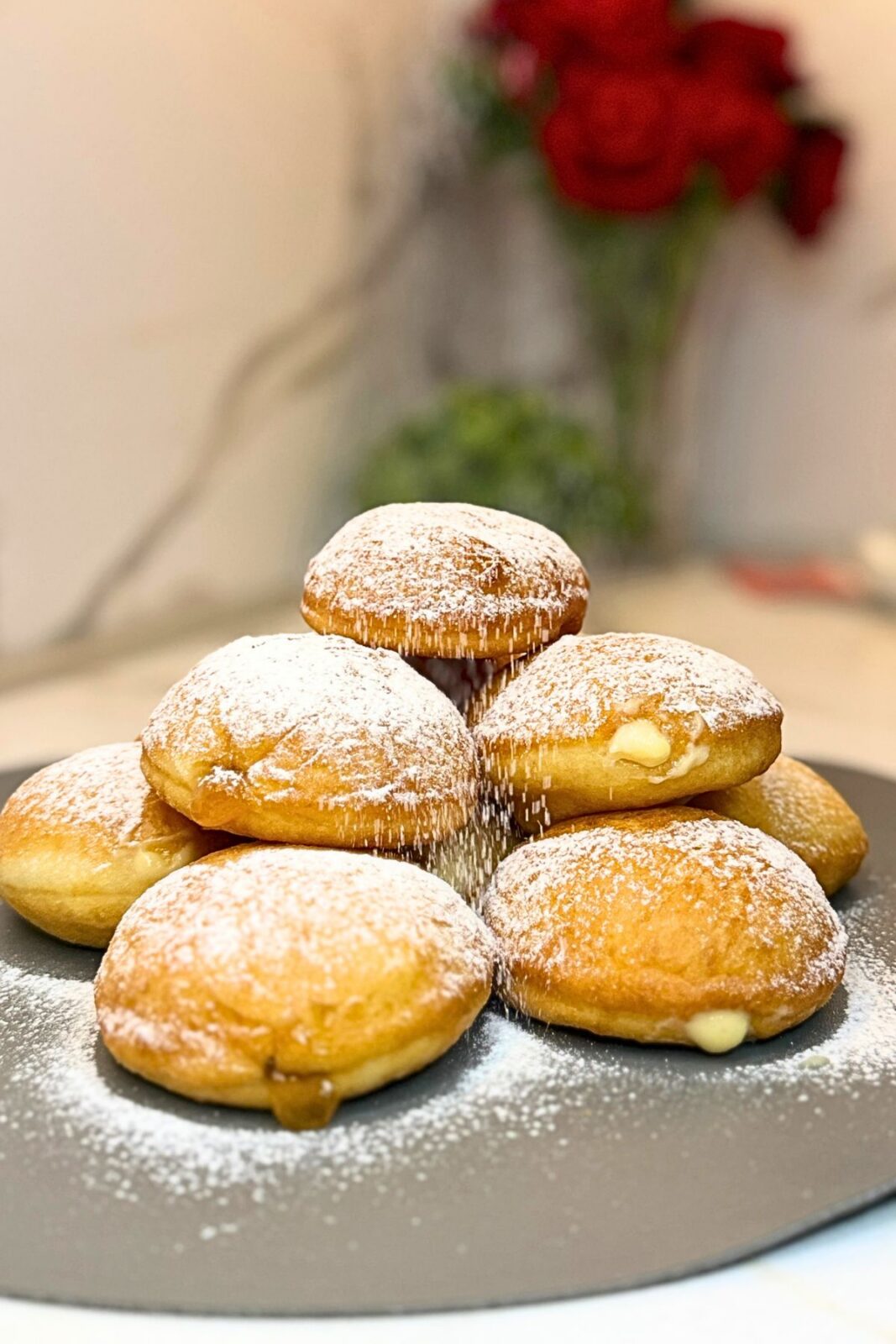
You don’t need a stand mixer to make these filled doughnuts. The dough comes together in a bowl and can be kneaded by hand before being rolled out and cut into rounds. If you enjoy working with sweet yeast dough, my Chocolate Brioche Bread is another lovely recipe to try.
Give the dough enough time to rise, including a second rest after cutting out the rounds. Look for dough that has visibly puffed up, since a cooler kitchen can make rising take longer. For helpful background on kneading and proofing, King Arthur Baking’s yeast baking guide is a useful resource.
Below, I’ll walk you through shaping, frying, and filling your doughnuts, with step-by-step photos so you can follow along at each stage.
Quick Recipe Info
- Prep Time: Approximately 30 minutes, including yeast activation
- Rise Time: 1 hour 20 minutes, divided into two rises
- Frying Time: Approximately 20 minutes, working in batches
- Cooling and Filling Time: Approximately 20 minutes
- Total Time: About 2 hours 30 minutes
- Yield: 20 filled doughnuts
- Frying Temperature: 350°F (175°C)
- Method: Deep frying
- Difficulty: Moderate
- Filling Options: Vanilla cream, apricot jam, or chocolate spread
Why You’ll Love These Filled Doughnuts
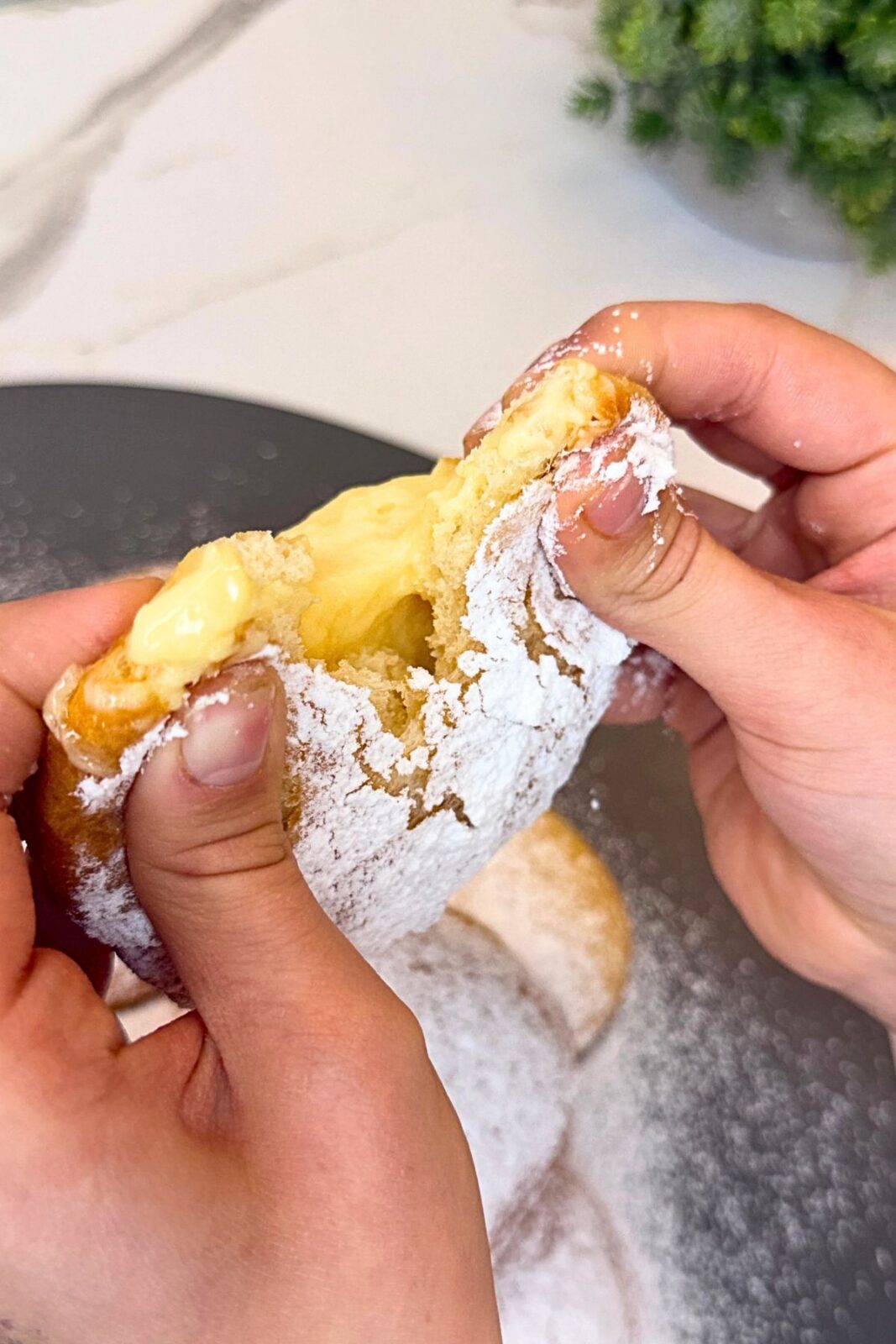
- Soft, fluffy centers: The milk-based yeast dough puffs up beautifully during frying, creating a tender interior beneath the golden crust.
- Two delicious filling options: Choose smooth vanilla cream or fruity apricot jam, or make some of each so everyone can pick a favorite.
- Simple pantry ingredients: The dough uses everyday staples like flour, milk, eggs, sugar, oil, and yeast.
- No stand mixer needed: You can mix and knead the dough by hand using basic kitchen equipment.
- A batch made for sharing: This recipe makes 20 filled doughnuts, perfect for a weekend brunch or a sweet afternoon gathering.
- Delicious without filling, too: Leave a few plain and finish them with powdered sugar for a simple, classic treat.
Ingredients You’ll Need
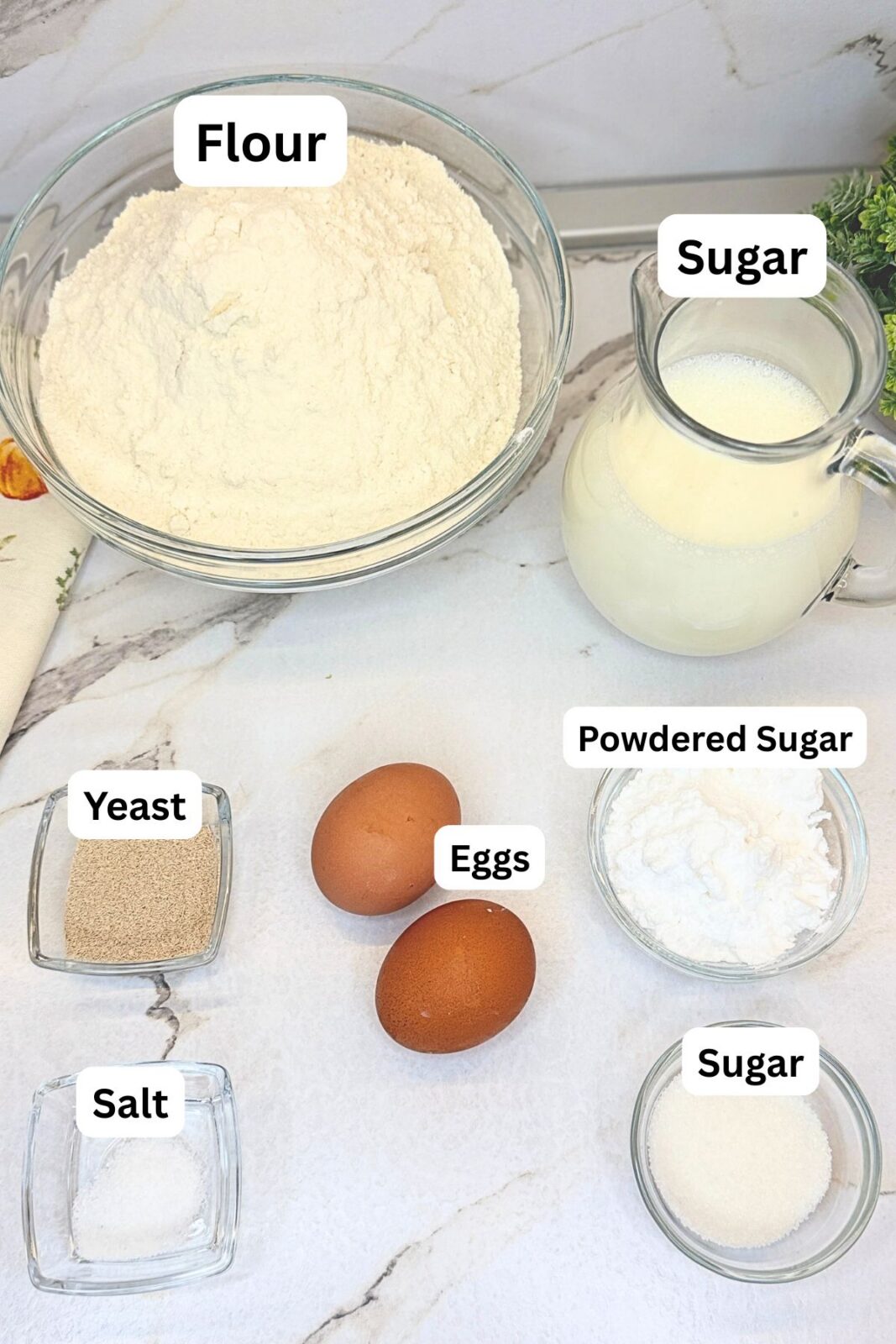
These filled doughnuts start with everyday ingredients and your choice of filling. You’ll find the full quantities in the recipe card below.
- All-purpose flour: Gives the dough structure while keeping the centers tender. You’ll also need a little for dusting your work surface.
- Milk: Use lukewarm milk to activate the yeast. It should feel gently warm, rather than hot.
- Dry yeast: Helps the dough rise and creates the light, airy texture.
- Granulated sugar: Sweetens the dough and is mixed with the milk and yeast at the beginning.
- Eggs: Add richness and help give the dough its soft texture.
- Neutral oil: Goes into the dough to keep it tender. You’ll need additional oil, such as vegetable or canola oil, for frying.
- Salt: Balances the sweetness and brings out the flavor.
- Powdered sugar: For dusting the finished doughnuts before serving.
Filling Options
- Vanilla cream: Use a thick, smooth cream that has cooled completely before piping.
- Apricot jam: Choose a smooth jam that will pass easily through your piping tip.
- Chocolate spread: A delicious alternative if you’d like a chocolate version.
You can also leave some doughnuts unfilled and simply dust them with powdered sugar.
How to Make Filled Doughnuts
Follow these steps to make homemade filled doughnuts with vanilla cream, apricot jam, or your favorite chocolate spread.
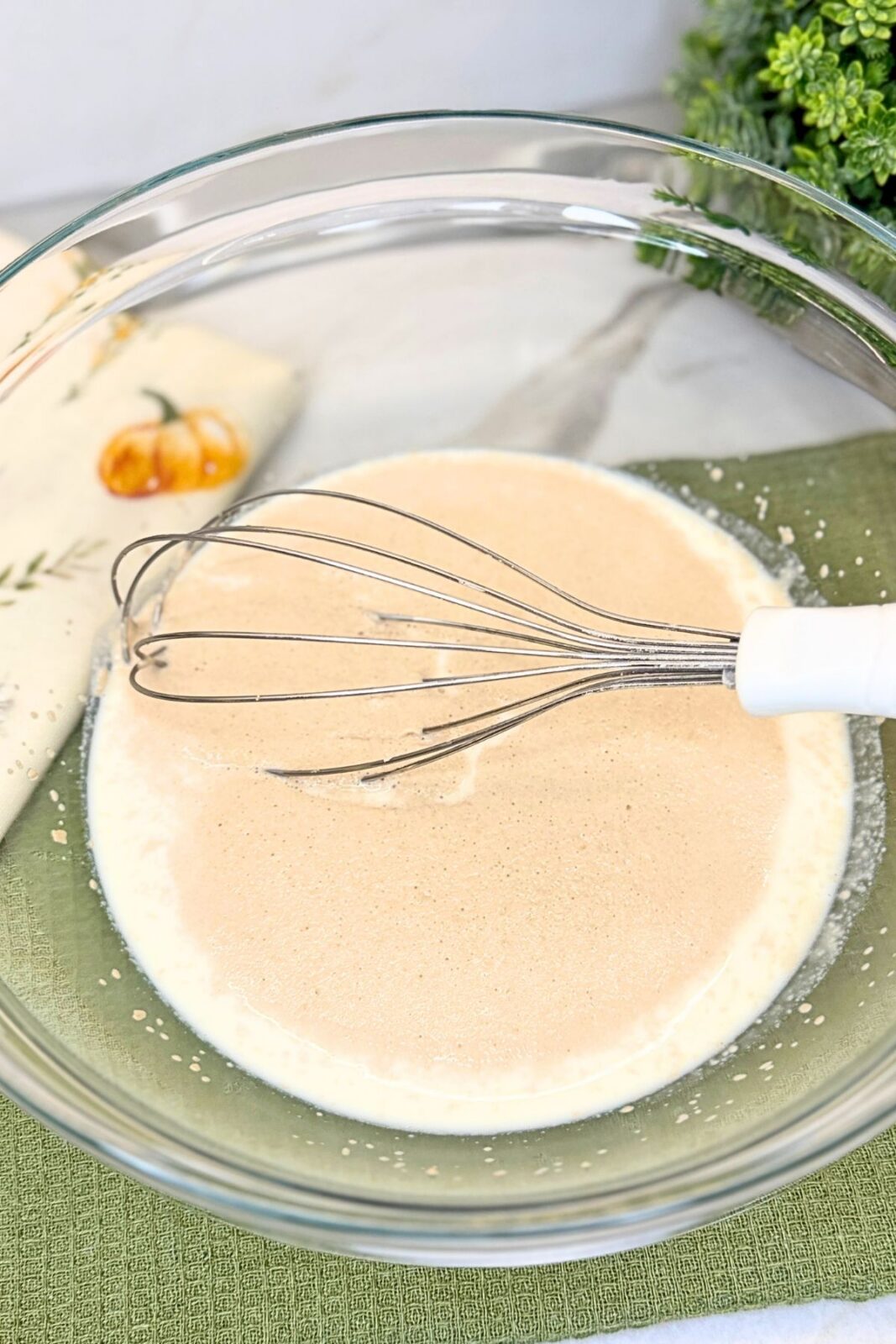
1. Activate the Yeast
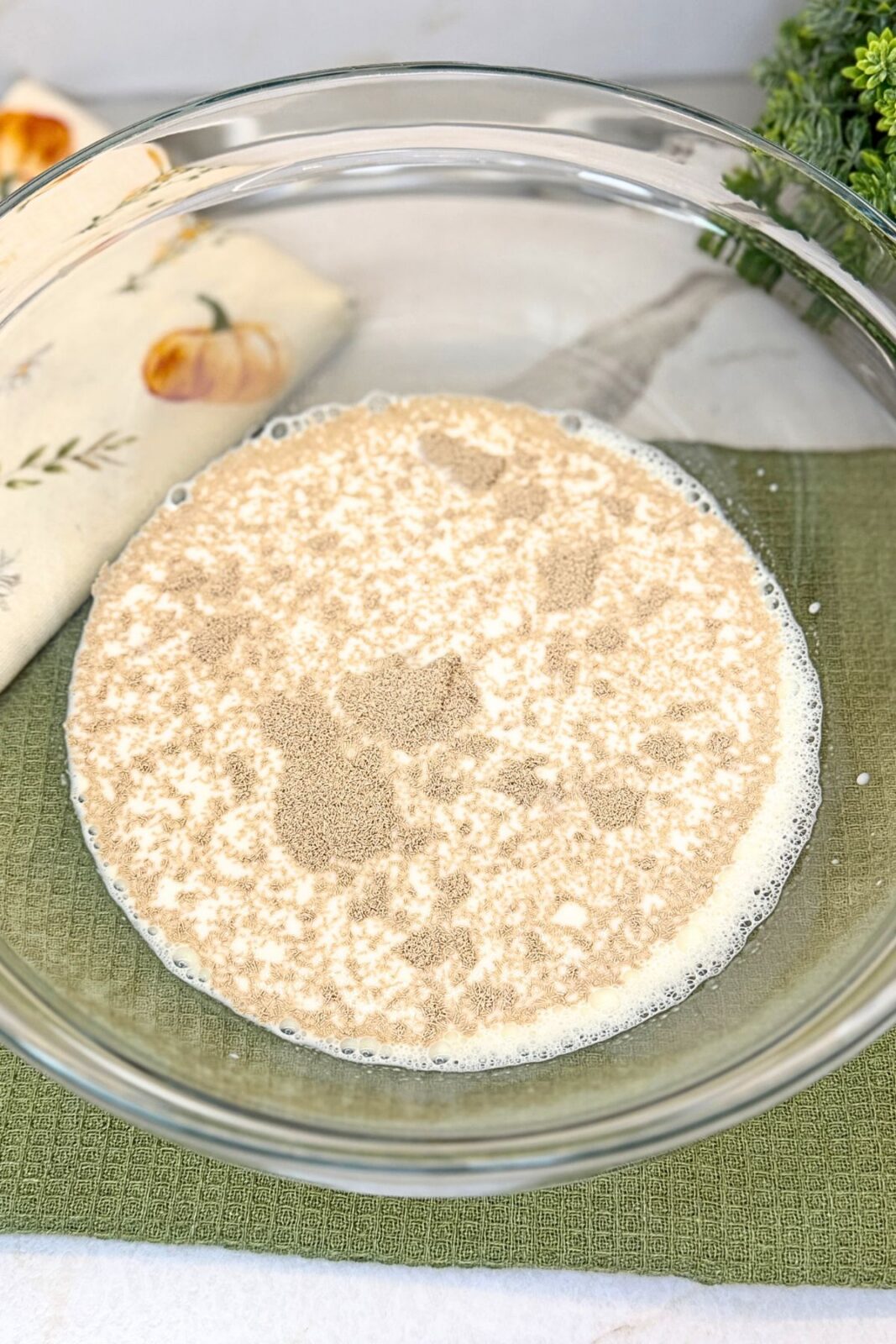
Pour the lukewarm milk into a large mixing bowl. Add the yeast and granulated sugar, then stir to combine. Let the mixture stand for 5–10 minutes, until the yeast becomes foamy.
2. Make the Dough
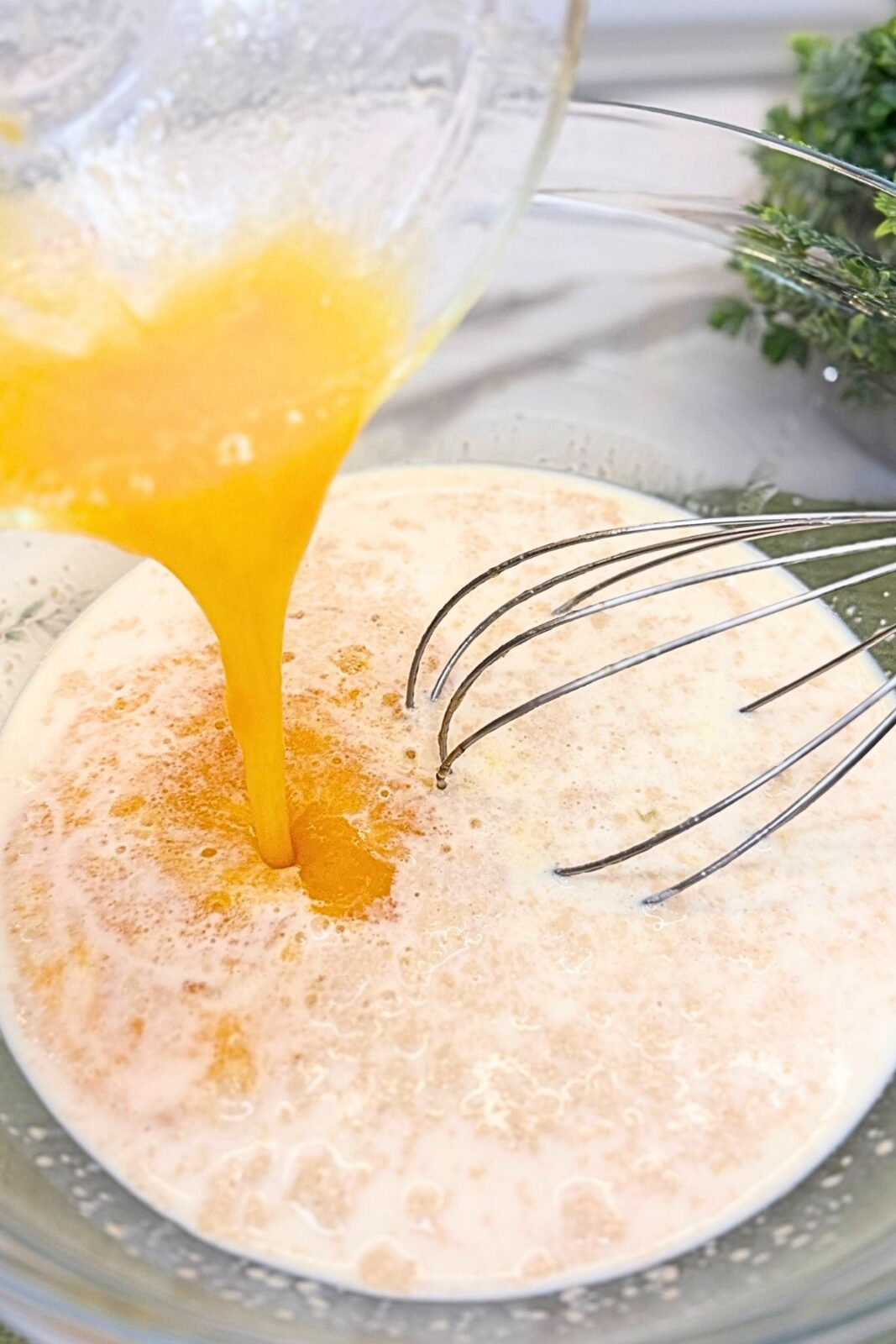
In a separate small bowl, whisk together the eggs, salt, and oil. Pour this mixture into the yeast mixture and stir well.
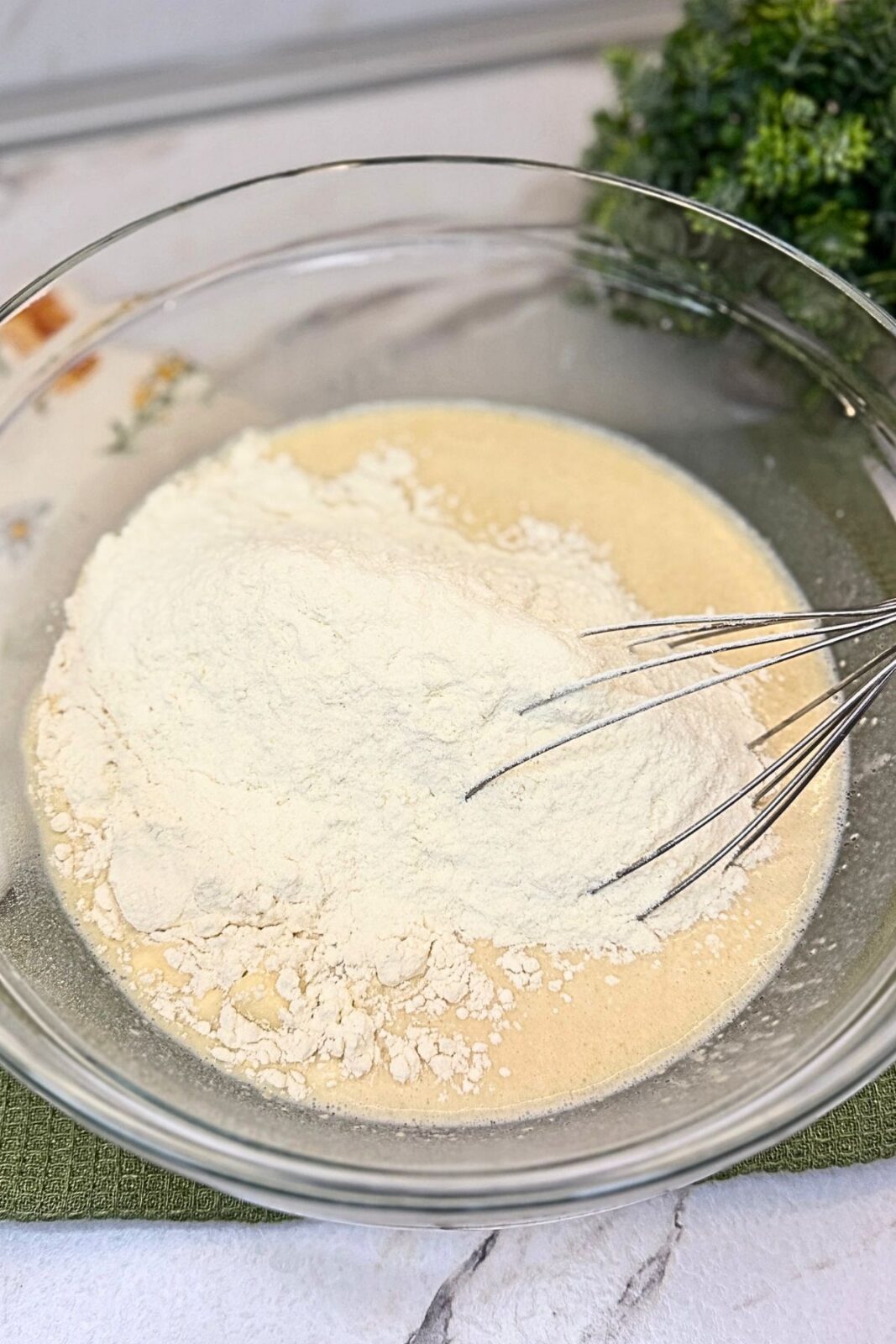
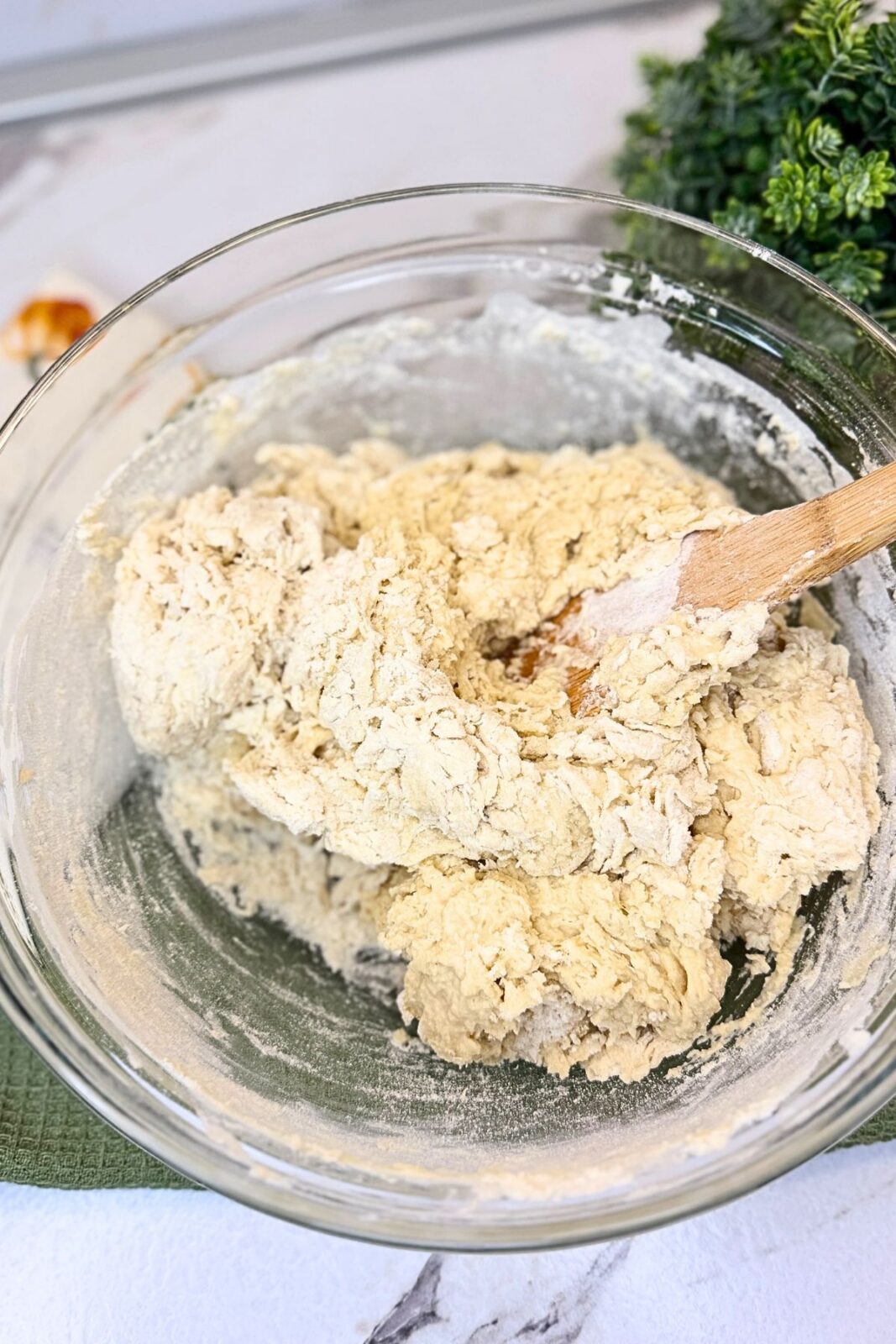
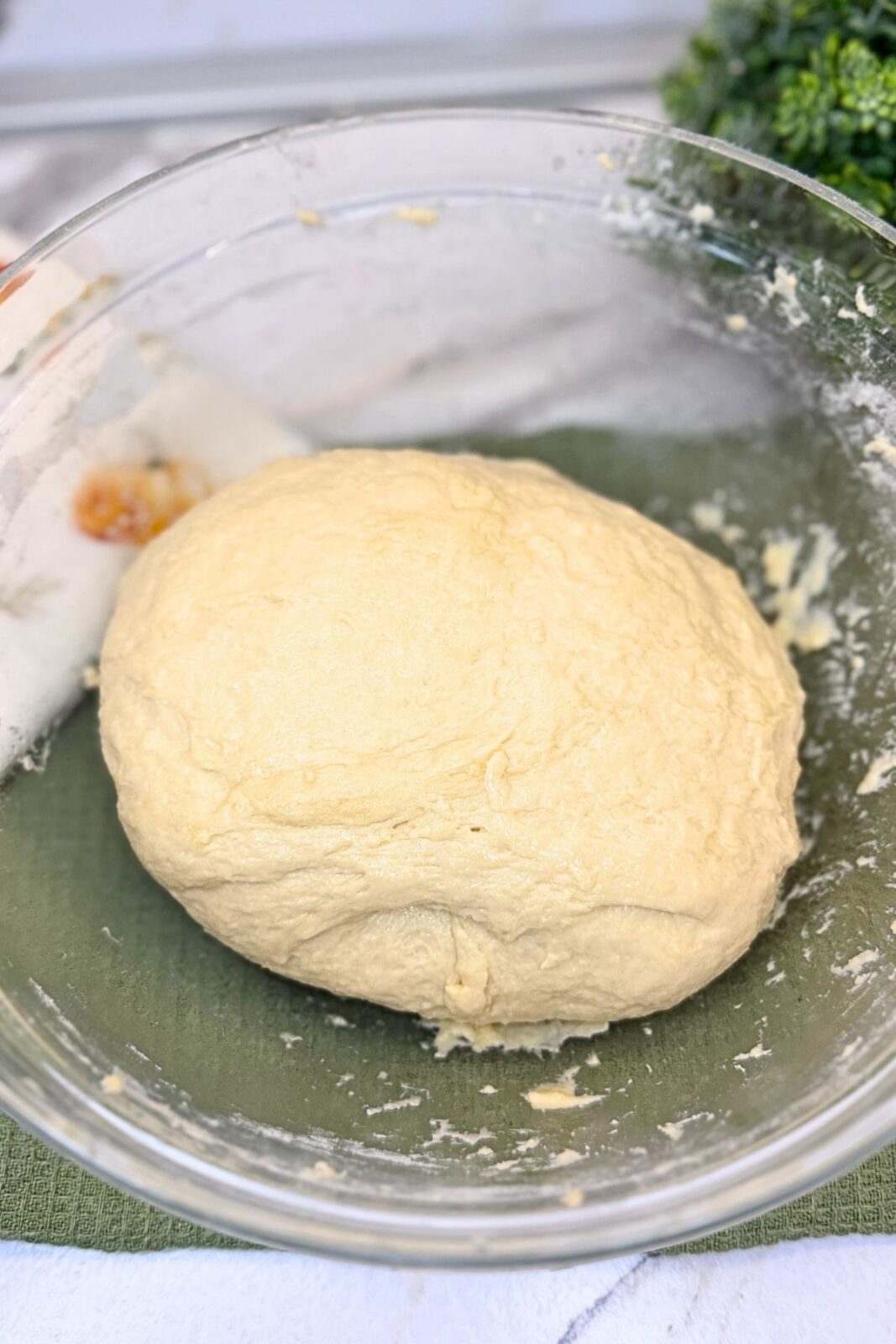
Gradually add the flour, mixing until a dough forms. Knead until smooth and elastic. The dough should feel soft and slightly tacky; avoid adding too much extra flour, which can make the doughnuts dense.
3. Let the Dough Rise
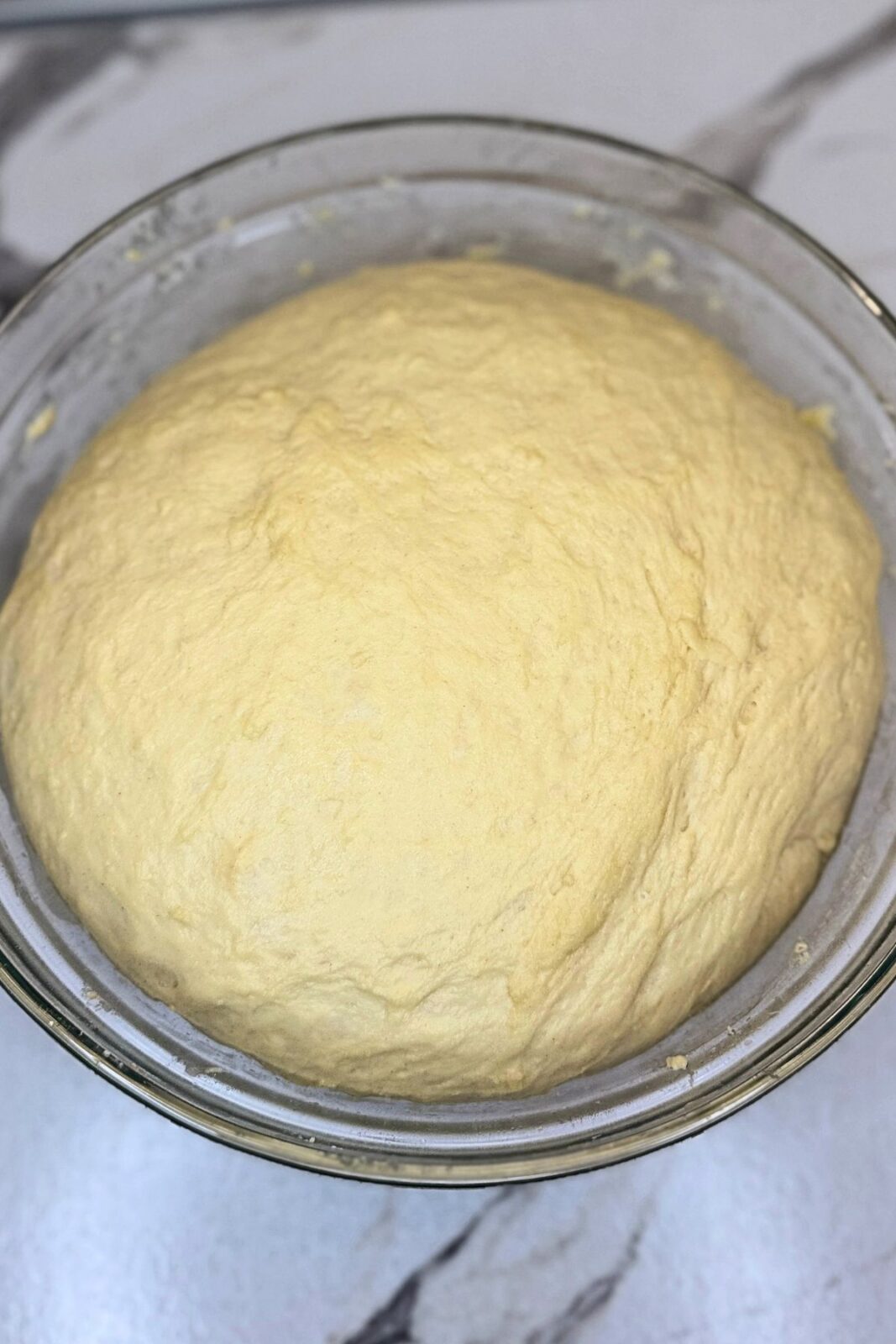
Place the dough in a lightly oiled bowl and cover it with a clean kitchen towel or plastic wrap. Let it rise in a warm place for about 1 hour, or until doubled in size.
4. Roll and Cut
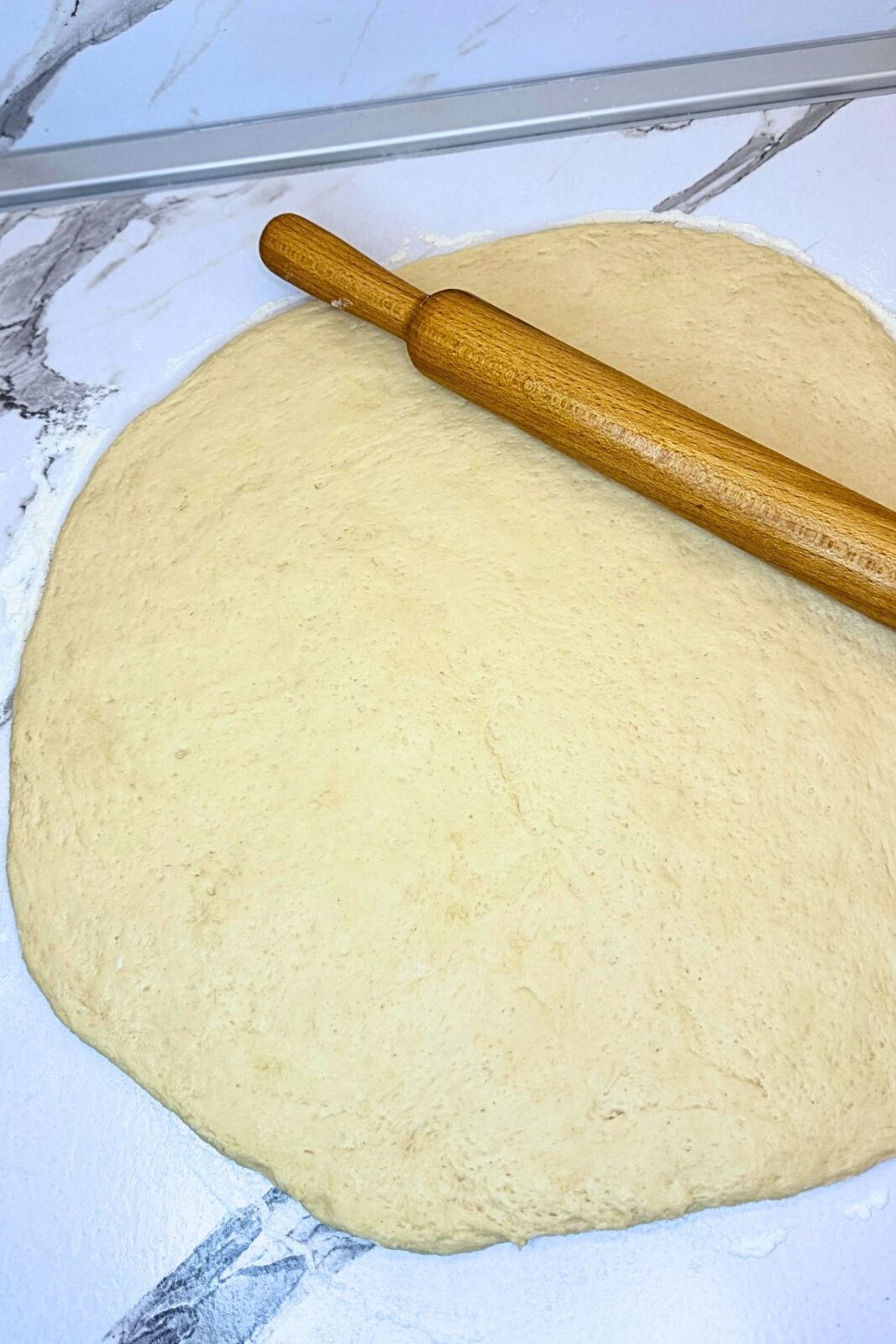
Turn the risen dough out onto a lightly floured surface. Roll it gently to approximately ⅜ inch (1 cm) thick.
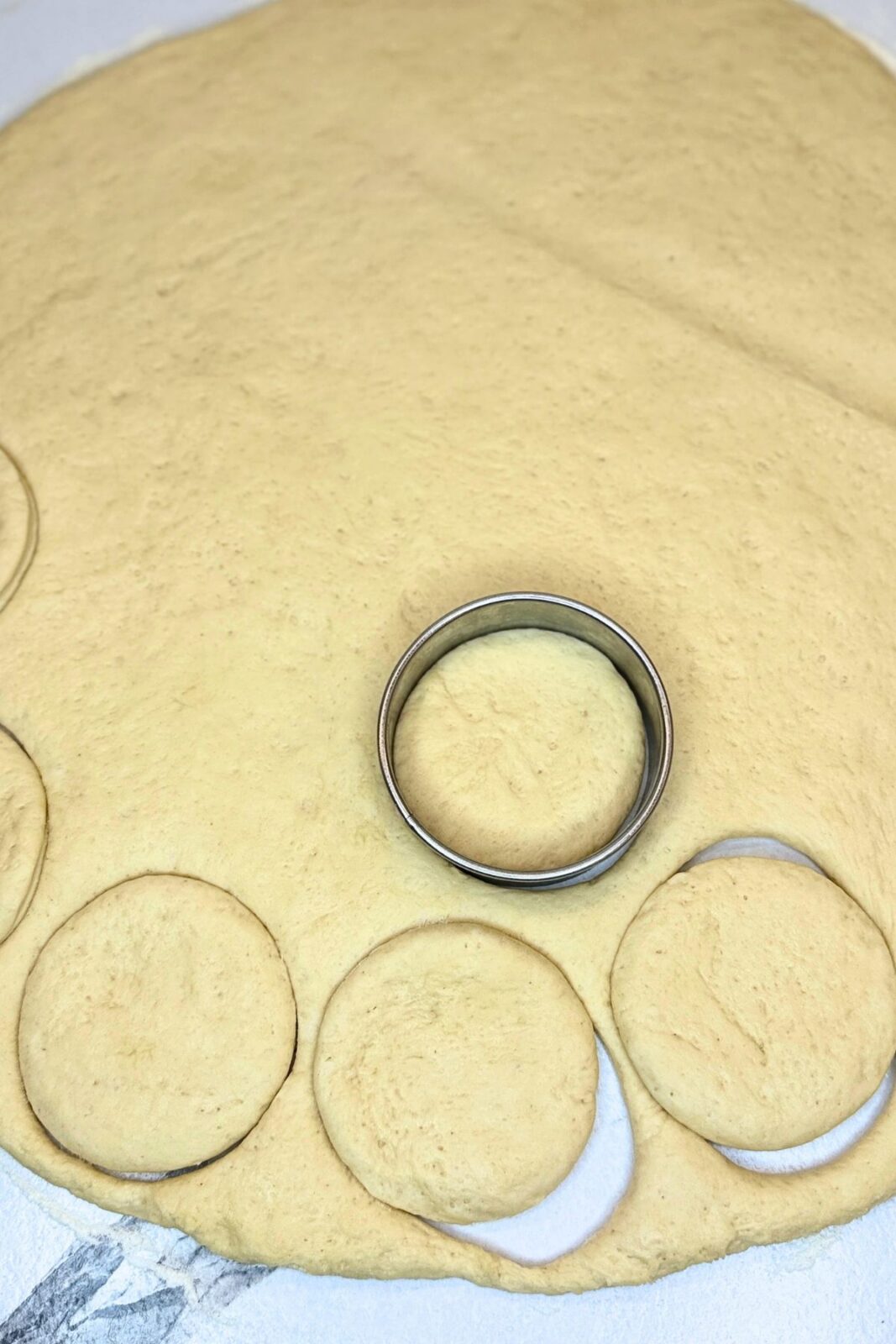
Use a lightly floured round cutter to cut out circles, leaving the centers intact. Gather and gently reroll the scraps to cut additional rounds.
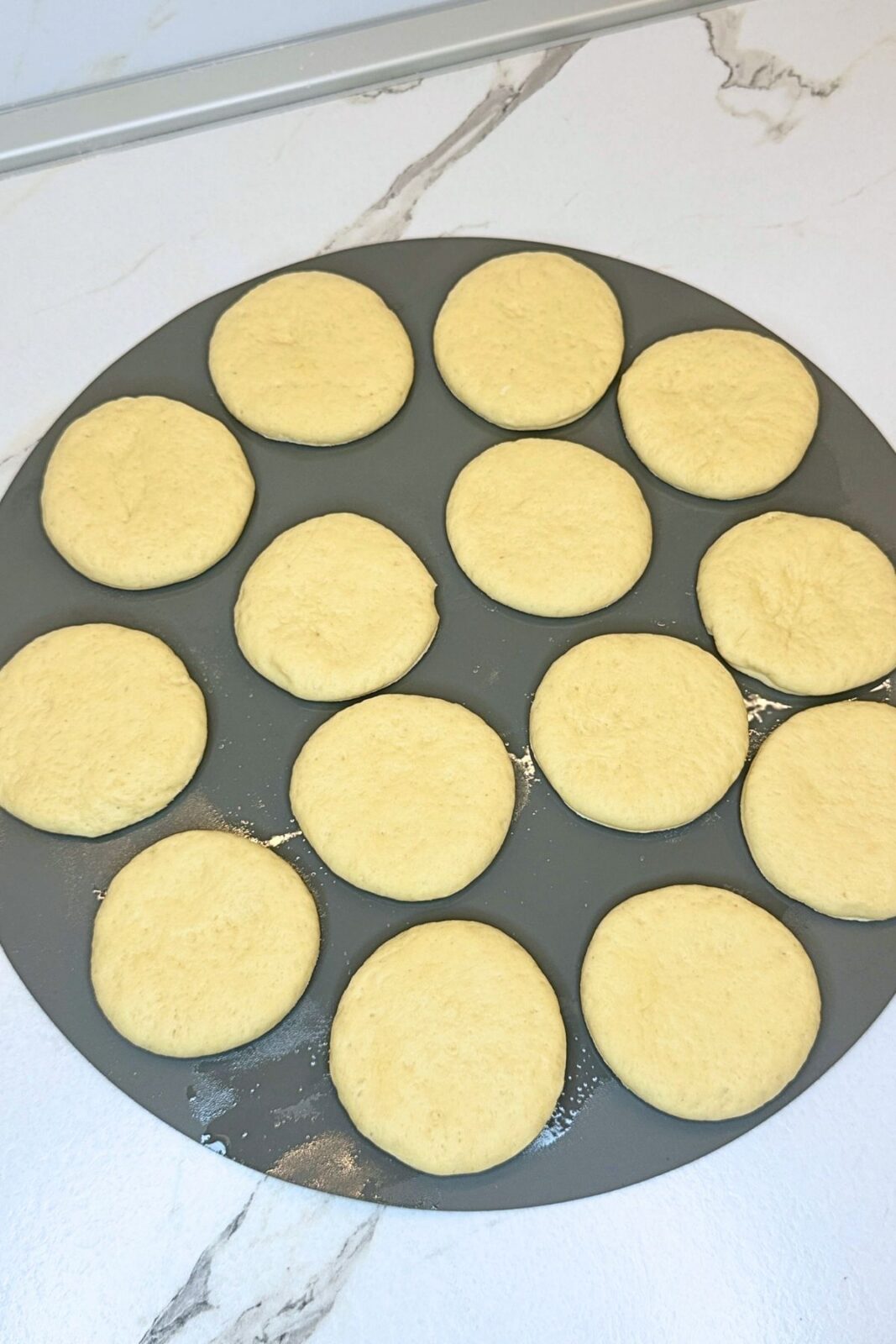
5. Let the Rounds Rise Again
Arrange the rounds on a lightly floured tray, leaving space between them. Cover loosely and let them rise for about 20 minutes, until noticeably puffy. Handle them gently when transferring them to the oil.
6. Fry Until Golden
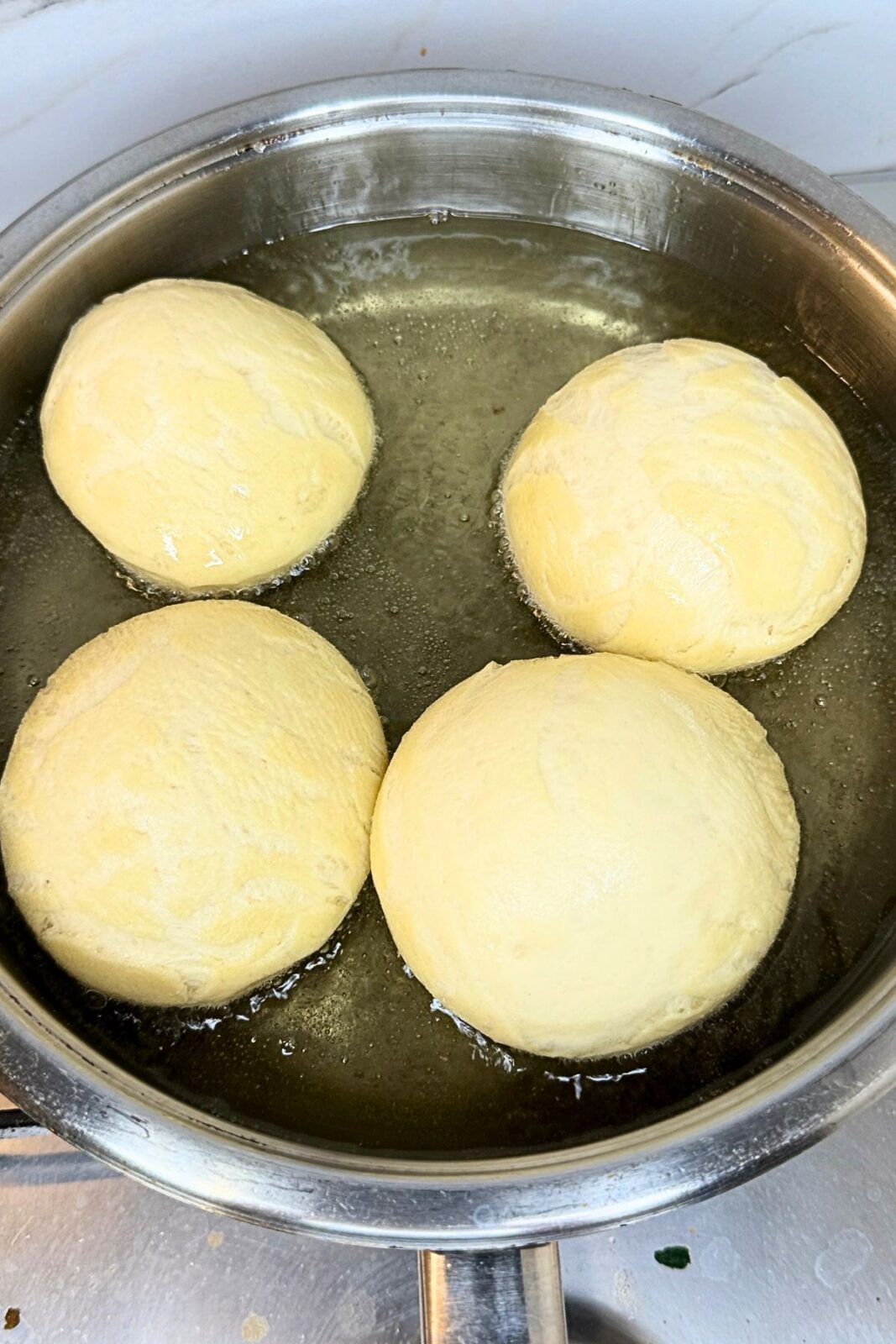
Heat enough neutral oil in a deep, heavy pan for the doughnuts to float without touching the bottom. Bring the oil to 350°F (175°C), checking with a frying thermometer.
Carefully add a few rounds at a time without crowding the pan. Fry until golden brown underneath, then gently turn and cook the other side. Adjust the heat as needed to maintain the oil temperature between batches.
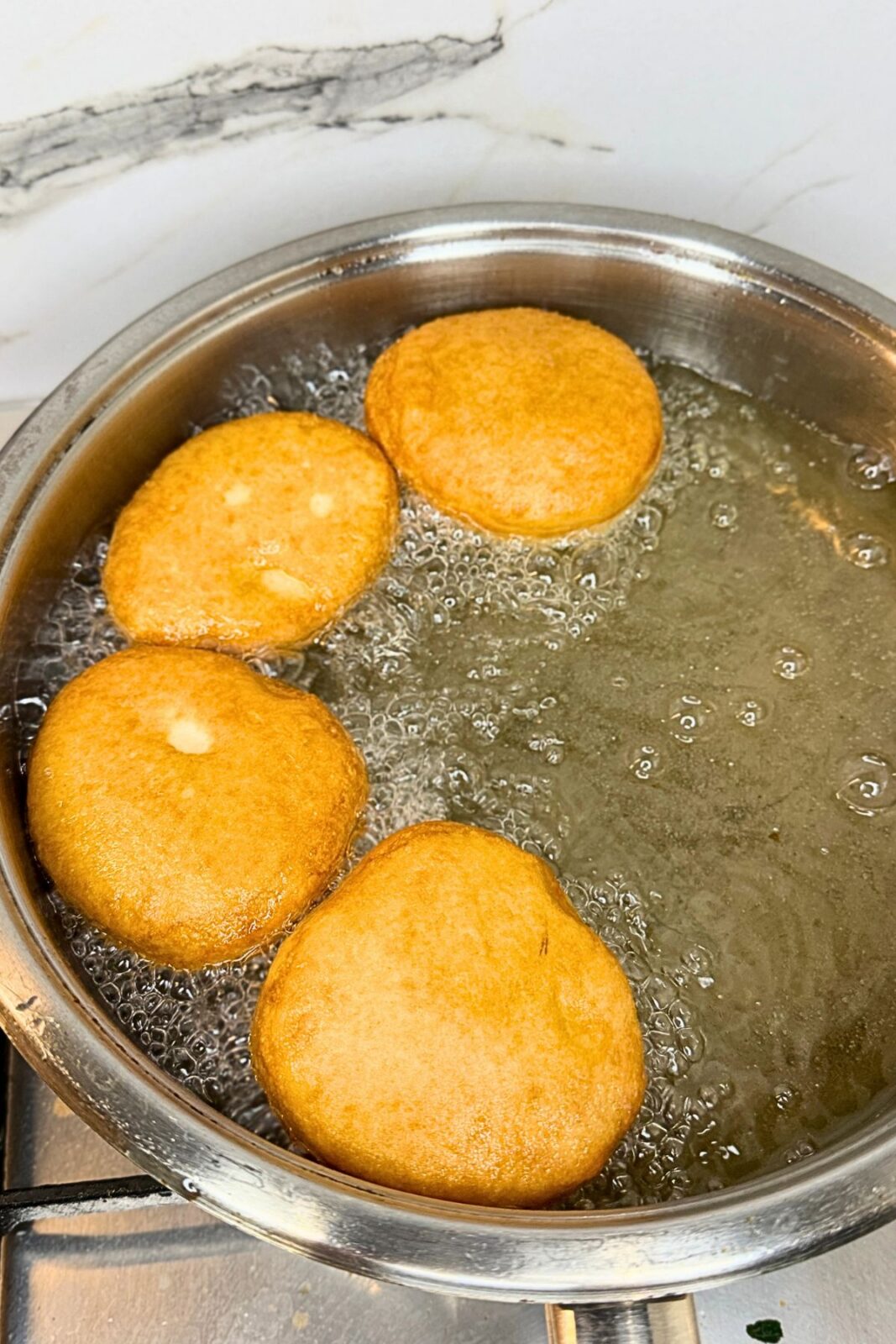
7. Drain and Cool
Transfer the fried doughnuts to a tray lined with paper towels to absorb excess oil, then move them to a wire rack. Let them cool completely before adding the filling.
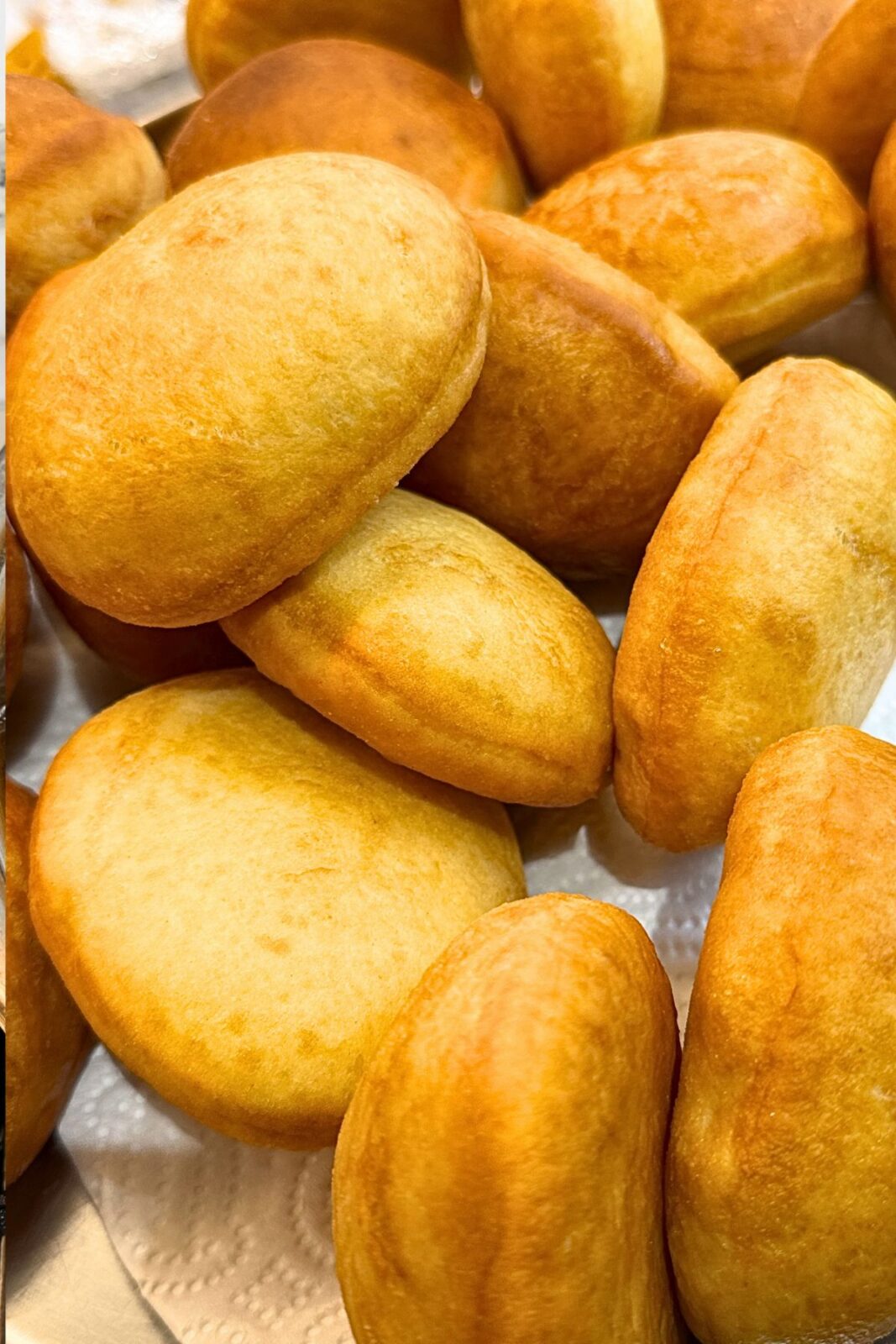
8. Fill and Finish
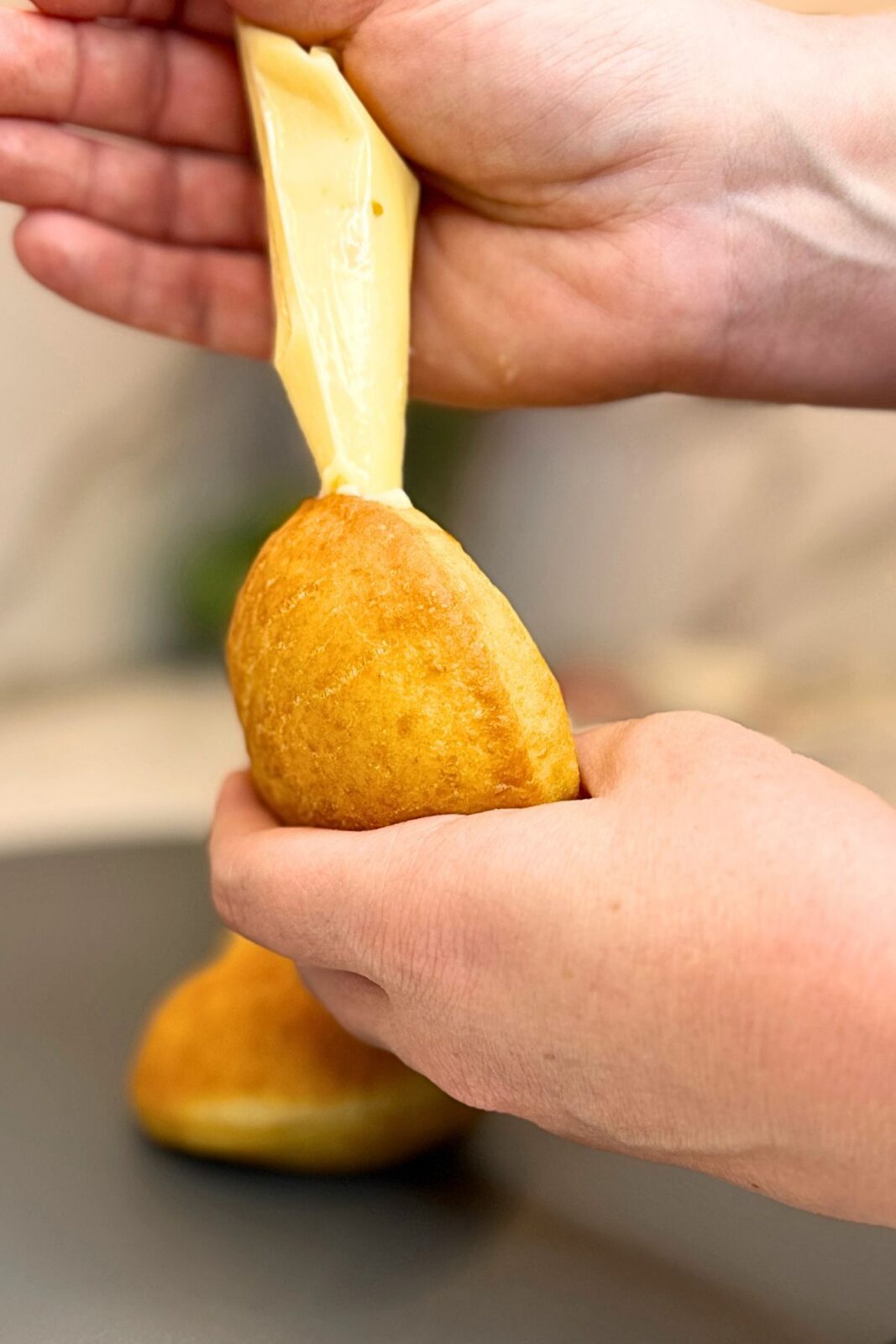
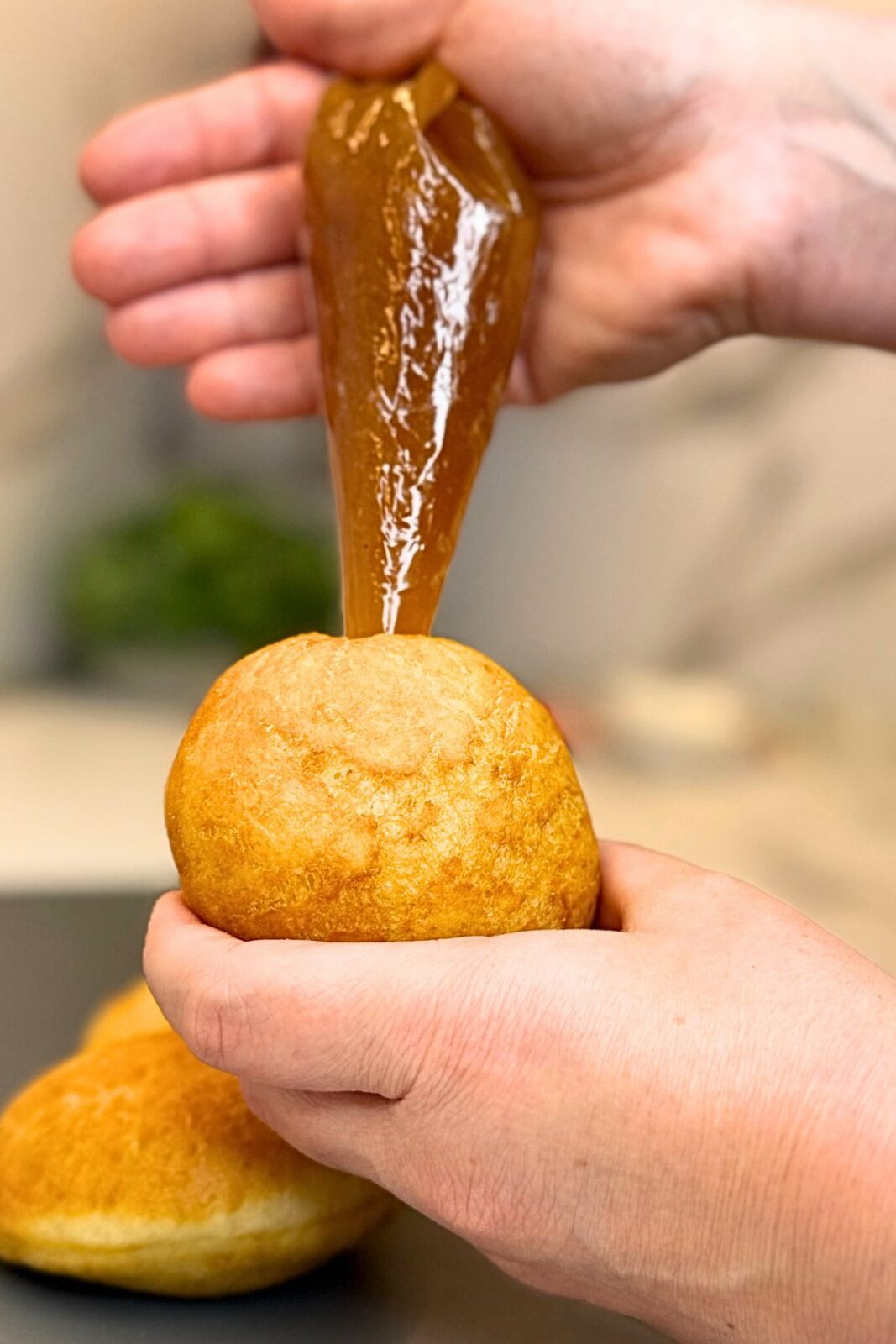
Make a small opening in the side of each doughnut with a skewer or the handle of a small spoon. Gently create space inside without piercing the opposite side.
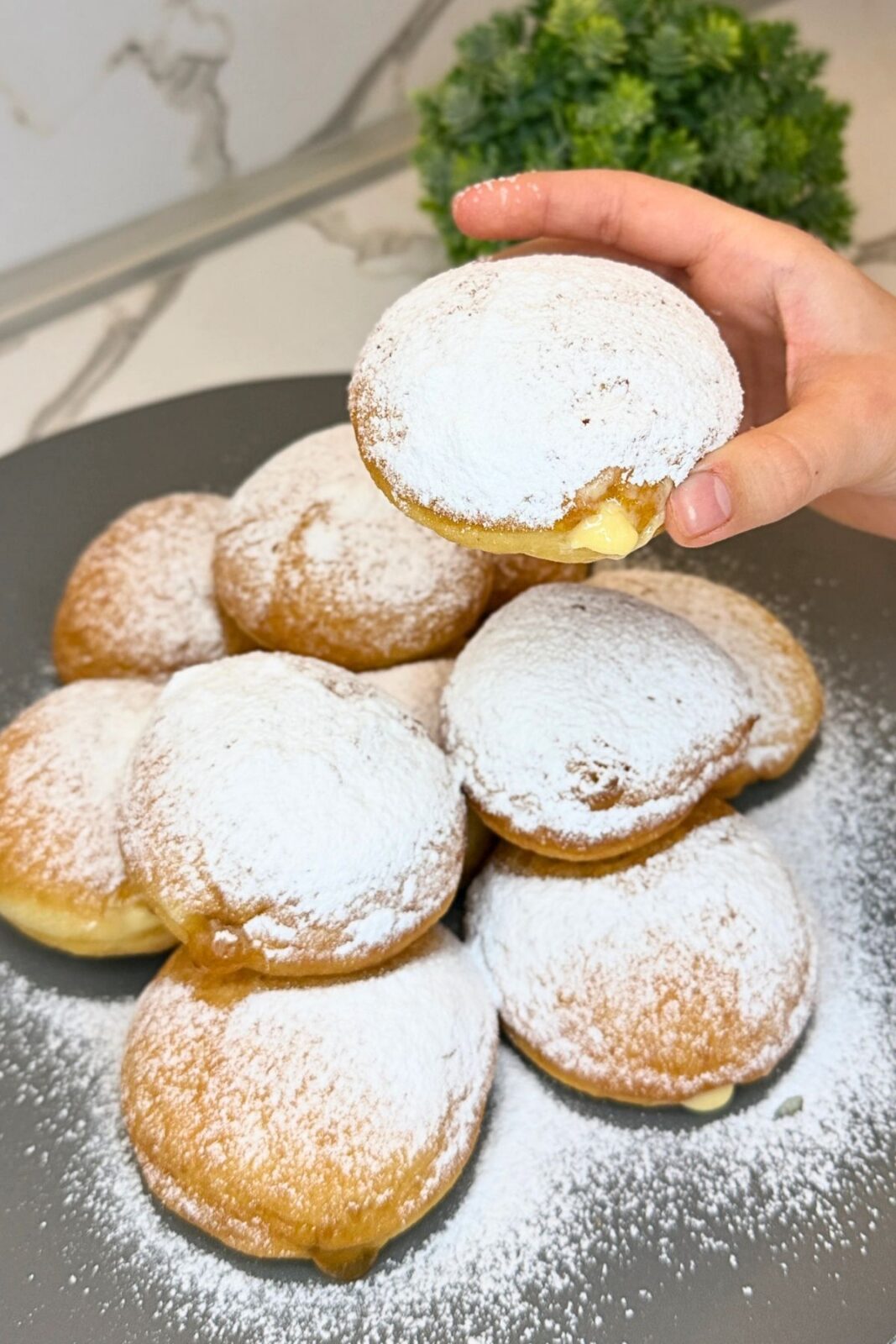
Pipe cooled vanilla cream or smooth apricot jam into the doughnuts. You can also use chocolate spread or leave some unfilled. Finish your filled doughnuts with a dusting of powdered sugar before serving.
How to Store and Freeze
These filled doughnuts taste best on the day they’re made, but you can save leftovers or freeze some before filling.
At Room Temperature
Store completely cooled, unfilled doughnuts in an airtight container for up to 2 days. Keep them in a cool, dry place and add powdered sugar shortly before serving.
In the Refrigerator
Store vanilla cream or apricot jam filled doughnuts in an airtight container in the refrigerator and enjoy within 2 days for the best texture. Refrigeration can firm up the dough slightly.
Keep cream-filled doughnuts refrigerated at 40°F (4°C) or below. Don’t leave them at room temperature for more than 2 hours, or 1 hour when the temperature is above 90°F (32°C).
How to Freeze
For the best results, freeze the doughnuts before adding filling or powdered sugar. Let them cool completely, wrap each one individually, and place them in a freezer-safe bag or airtight container. Freeze for up to 2 months for the best quality.
How to Thaw
Thaw the unfilled doughnuts at room temperature while still wrapped. Once thawed, pipe in your vanilla cream or apricot jam and finish with a fresh dusting of powdered sugar.
Frequently Asked Questions (FAQ)
Why isn’t my dough rising?
The yeast may be old, the milk may have been too hot, or your kitchen may be cool. Start with lukewarm milk and check that the yeast mixture becomes foamy. Give the dough extra time if needed; it should double in size during the first rise.
Why are my filled doughnuts dense?
Too much flour, insufficient kneading, or a short rising time can make doughnuts dense. Keep the dough soft, knead until smooth and elastic, and let the cut rounds become noticeably puffy before frying.
Why did my doughnuts turn out greasy?
The oil may have been too cool, especially after adding several doughnuts at once. Use a thermometer to maintain approximately 350°F (175°C), fry in small batches, and let the oil return to temperature between batches.
Why are they brown outside but doughy inside?
The oil may be too hot, causing the outside to brown before the center cooks. Dough rolled too thick can also cause this. Keep the thickness close to ⅜ inch (1 cm) and check the first doughnut before frying the remaining batches.
Can I make these without a doughnut cutter?
Yes. Use a round cookie cutter or a sturdy drinking glass with a thin rim. Lightly flour the edge before cutting, and leave the centers intact so there is room for the filling.
Can I use a different filling?
Absolutely. Smooth strawberry, raspberry, or cherry jam works well, as does chocolate spread. Avoid large fruit pieces that could block your piping tip. If you enjoy sweet yeast dough paired with jam, try my Cranberry Bread for another homemade treat.
Should I fill the doughnuts while they’re warm?
Let the doughnuts cool completely first. Warm doughnuts can soften the cream and make the filling runny. Your vanilla cream should also be cooled and thick enough to pipe.
Can I halve the recipe?
Yes. Halve all the dough ingredients, using 1 egg instead of 2, to make approximately 10 filled doughnuts. Keep the same dough thickness and frying temperature. You’ll still need enough frying oil for the doughnuts to float freely.
Nutrition per Serving
Approximate values per 1 unfilled doughnut, based on a batch of 20 doughnuts.
- Calories: 240 kcal
- Carbohydrates: 35 g
- Protein: 5 g
- Fat: 9 g
- Saturated Fat: 1 g
- Sugar: 9 g
- Fiber: 1 g
- Sodium: 130 mg
Estimated using whole milk, canola oil, and all 50 g of powdered sugar divided across the batch. The calculation assumes approximately 5 g of frying oil absorbed per doughnut; actual absorption will vary. Vanilla cream, apricot jam, and chocolate fillings are not included and will increase the values.
Conclusion
These homemade filled doughnuts bring a little bakery magic to your kitchen, with golden outsides, soft centers, and your choice of vanilla cream or apricot jam. Making a batch takes a little patience, but each step is simple, from mixing the dough to piping in the filling.
Make both versions for a plate with something for everyone, or leave a few plain with powdered sugar. They’re especially lovely shared fresh with family over coffee or at a relaxed weekend breakfast.
If you try these filled doughnuts, leave a comment and a recipe rating below. I’d love to hear which filling you chose!
Happy Baking!

The Best Cream & Jam Filled Doughnuts
Ingredients
Equipment
Method
- Activate the yeast. Pour the lukewarm milk into a large bowl. Add the yeast and granulated sugar and stir to combine. Let stand for 5–10 minutes, until foamy.
- Mix and knead. In a small bowl, whisk together the eggs, salt, and oil. Stir into the yeast mixture. Gradually add the flour, mixing until a dough forms. Knead until smooth and elastic. The dough should remain soft and slightly tacky.
- First rise. Place the dough in a lightly oiled bowl and cover. Let rise in a warm place for about 1 hour, or until doubled in size.
- Roll and cut. Transfer the dough to a lightly floured surface. Roll to approximately ⅜ inch (1 cm) thick. Cut into rounds with a lightly floured round cutter, leaving the centers intact. Gently gather and reroll the scraps to cut additional rounds.
- Second rise. Arrange the rounds on lightly floured trays, leaving space between them. Cover loosely and let rise for about 20 minutes, until noticeably puffy.
- Fry. Heat the frying oil in a deep, heavy pan to 350°F (175°C). Carefully add a few doughnuts at a time without crowding. Fry until golden underneath, then turn and fry the second side until golden and cooked through. Adjust the heat to maintain the oil temperature between batches. Check the center of the first doughnut to help judge cooking time.
- Drain and cool. Transfer the doughnuts to paper towels to absorb excess oil. Allow them to cool completely before filling.
- Fill and finish. Make a small opening in the side of each doughnut and gently create space inside without piercing the opposite side. Pipe in vanilla cream, apricot jam, or chocolate spread. Leave some unfilled if desired. Dust with powdered sugar before serving.
Notes
- Measure the flour by weight: Cup measurements are approximate. Use 700 g for the most consistent results.
- Filling: Use one filling or make an assortment. Quantities depend on how generously you fill each doughnut.
- Frying oil: The amount needed depends on your pan. Add enough for the doughnuts to float freely; the full amount is not absorbed.
- Timing: Times are approximate and do not include preparing vanilla cream from scratch. Rising time varies with kitchen temperature.
- Storage: Refrigerate filled doughnuts in an airtight container and enjoy within 2 days for the best texture.
- Freezing: Freeze cooled, unfilled doughnuts without powdered sugar for up to 2 months. Thaw before filling and dusting.
-
Nutrition per Serving
- Per 1 unfilled doughnut: approximately 240 kcal | Carbohydrates: 35 g | Protein: 5 g | Fat: 9 g | Saturated Fat: 1 g | Sugar: 9 g | Fiber: 1 g | Sodium: 130 mg. Estimated using whole milk, canola oil, all the powdered sugar, and approximately 5 g of absorbed frying oil per doughnut. Filling is not included. Actual values vary with ingredients and oil absorption.