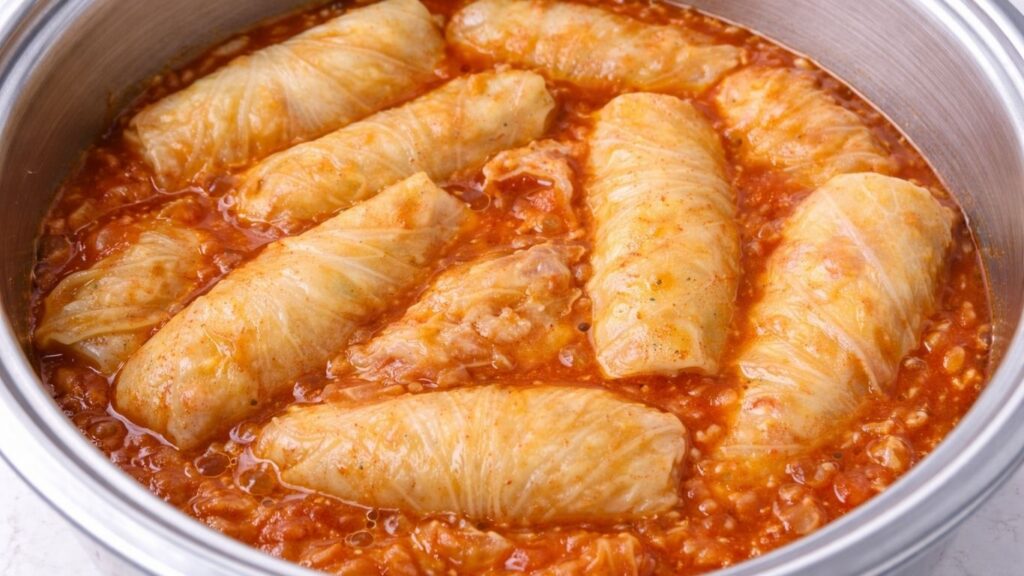
Stuffed cabbage rolls are a traditional Balkan dish- learn more about traditional Balkan cuisine on Wikipedia, where you can explore the rich food traditions of the Balkan region – and one of the most beloved comfort foods in the region, made with tender sour cabbage leaves filled with seasoned minced meat and rice. These traditional stuffed cabbage rolls, known as sarma in the Balkans, are slow-cooked with care and full of rich, comforting flavor.
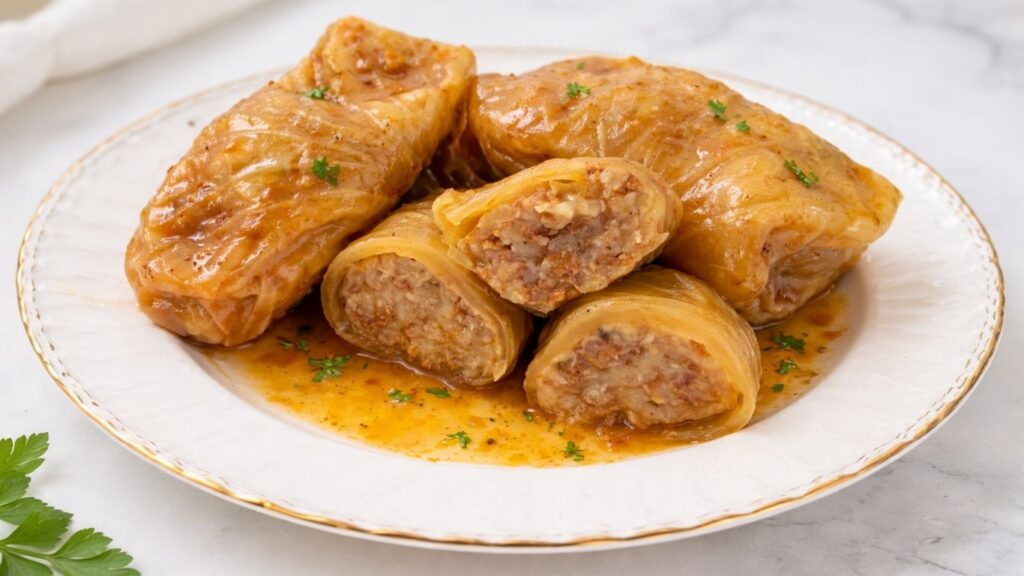
This traditional stuffed cabbage rolls recipe has been passed down through generations and is often prepared for family gatherings, holidays, and cozy winter days, because nothing compares to a pot of slowly simmered stuffed cabbage rolls that bring people together around the table, filling the home with warmth, rich aroma, and that special feeling of comfort only homemade food can give. This homemade sarma is perfect for family meals and special occasions.
MY LATEST VIDEOS
Quick Info
Recipe: Stuffed Cabbage Rolls (Sarma Recipe)
Cuisine: Traditional Balkan
Prep Time: 25–30 minutes
Cook Time: 2 hours
Total Time: about 2 hours 30 minutes
Servings: 4–5 people
Difficulty: Easy
Ingredients You’ll Need
These Stuffed Cabbage Rolls are made with traditional ingredients that slowly cook together to create a rich, comforting, and flavorful meal.
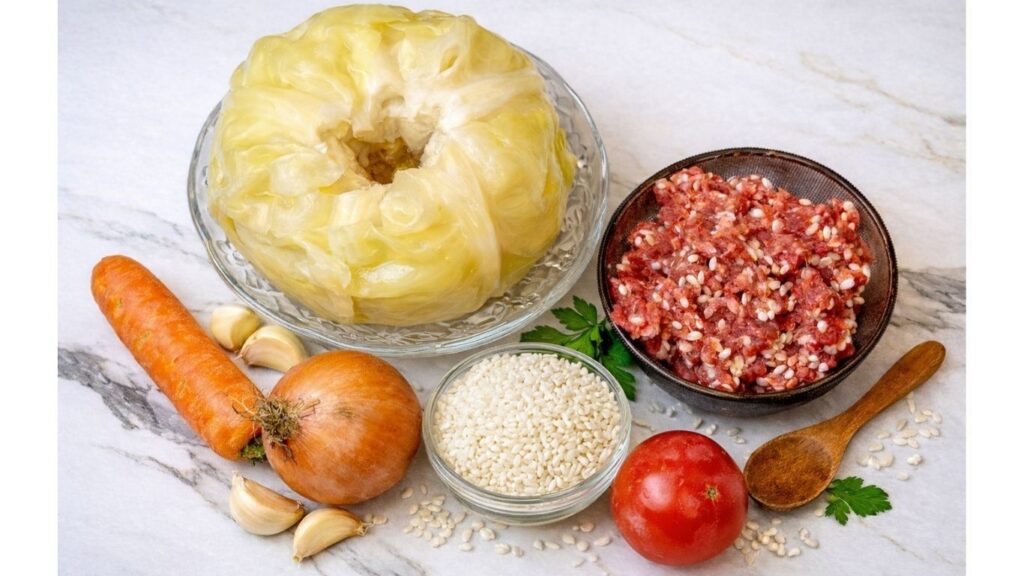
Sour cabbage leaves: Fermented cabbage leaves give sarma its distinctive tangy flavor. Rinse them lightly if they are especially salty.
Ground meat: Use ground beef or a combination of beef and pork for a richer, more traditional filling.
Rice: Uncooked white rice absorbs the flavorful cooking liquid and helps bind the filling. Rinse and drain it before use.
Onion, carrot, and garlic: These vegetables add moisture, natural sweetness, and depth of flavor to the meat filling.
Smoked or cured meat: Small pieces of smoked meat or bacon add a deep, savory, and slightly smoky flavor. This ingredient is optional but highly recommended.
Sweet paprika: Adds color, warmth, and traditional Balkan flavor without making the dish spicy.
Salt, black pepper, and mixed seasoning: Balance and enhance the filling and cooking liquid. Add salt carefully because fermented cabbage and smoked meat can already be salty.
Cornstarch: Slightly thickens the cooking liquid and creates a richer sauce around the cabbage rolls.
Water: Provides enough liquid for the rice to cook and the cabbage leaves to become tender.
How to Make Stuffed Cabbage Rolls
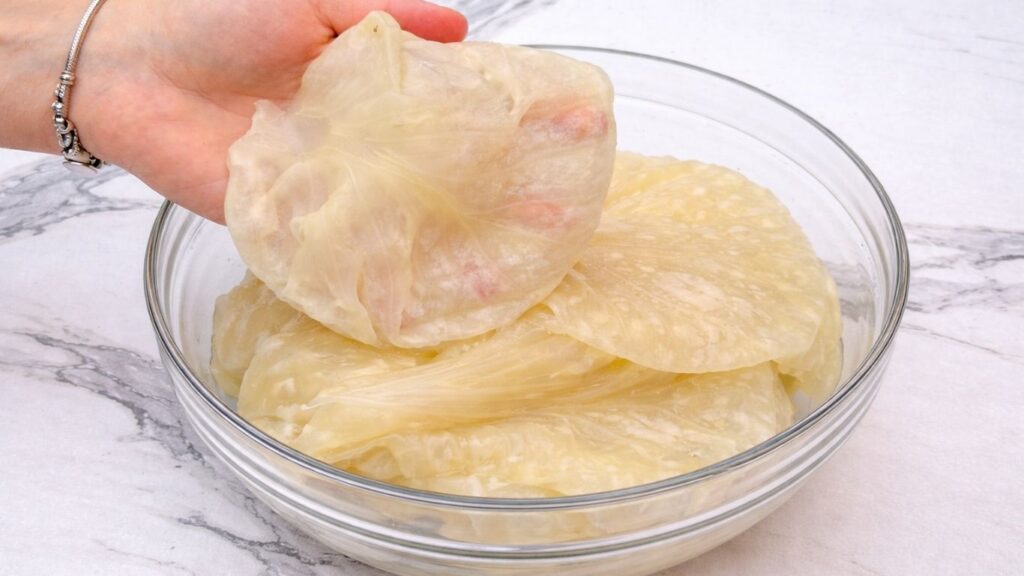
1.First, gently rinse the sour cabbage under cold water to remove any excess brine and adjust the saltiness if needed. Carefully separate the cabbage leaves one by one, trying to keep them whole and intact – this is an important step for making perfect sarma.
Using a small knife, trim and remove the thick, hard stem at the base of each leaf. This makes the leaves more flexible and much easier to roll later.
Once cleaned and trimmed, set the cabbage leaves aside – now they are ready to be filled and shaped into beautiful stuffed cabbage rolls.
2. Prepare the Vegetables
Wash and peel the vegetables, then cut them into smaller pieces so they are easier to process.
Place the onion, carrot, and garlic into a hand blender or food processor and blend until finely chopped and evenly combined. This creates a smooth, aromatic vegetable base that will blend perfectly into the filling and add natural sweetness and depth of flavor to the sarma.
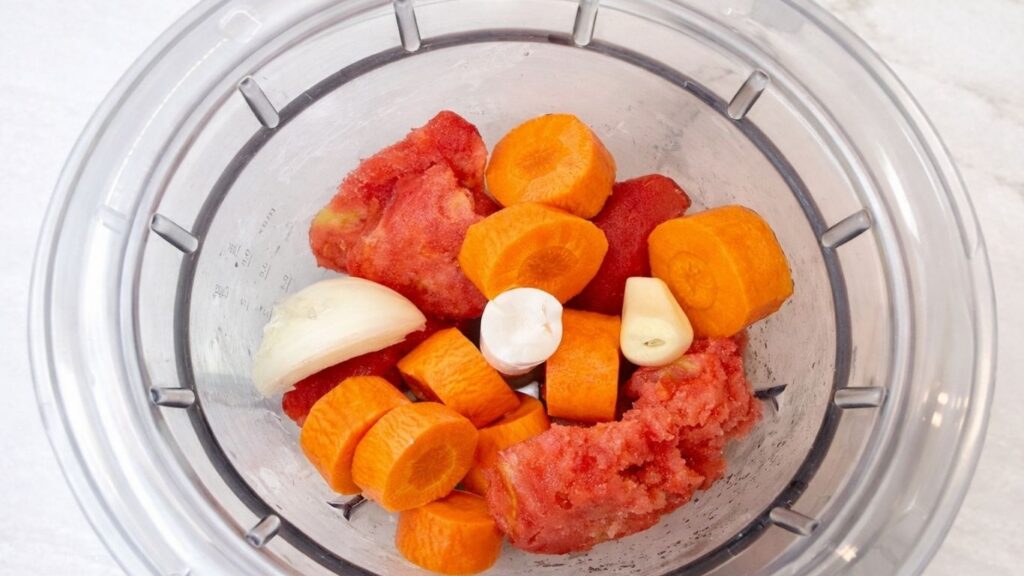
This step creates a smooth, aromatic vegetable base that blends perfectly into the meat and rice filling, adding natural sweetness, moisture, and rich flavor to the sarma as it slowly cooks.
3. Prepare the Meat and Rice Filling
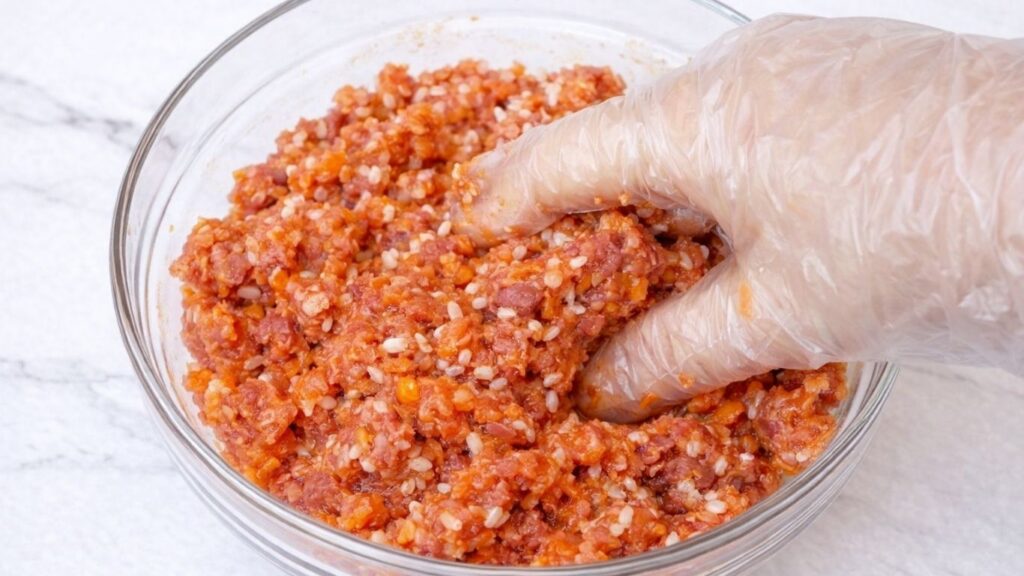
In a large bowl, combine the ground meat and rice. Before adding the rice, rinse it well under cold water until the water runs clear, then drain it thoroughly. Add the finely chopped onion, grated carrot, and minced garlic, then season with salt, black pepper, sweet paprika, and any additional mixed seasoning you like. Mix everything together until well combined and evenly distributed, creating a smooth and flavorful filling for the sarma.
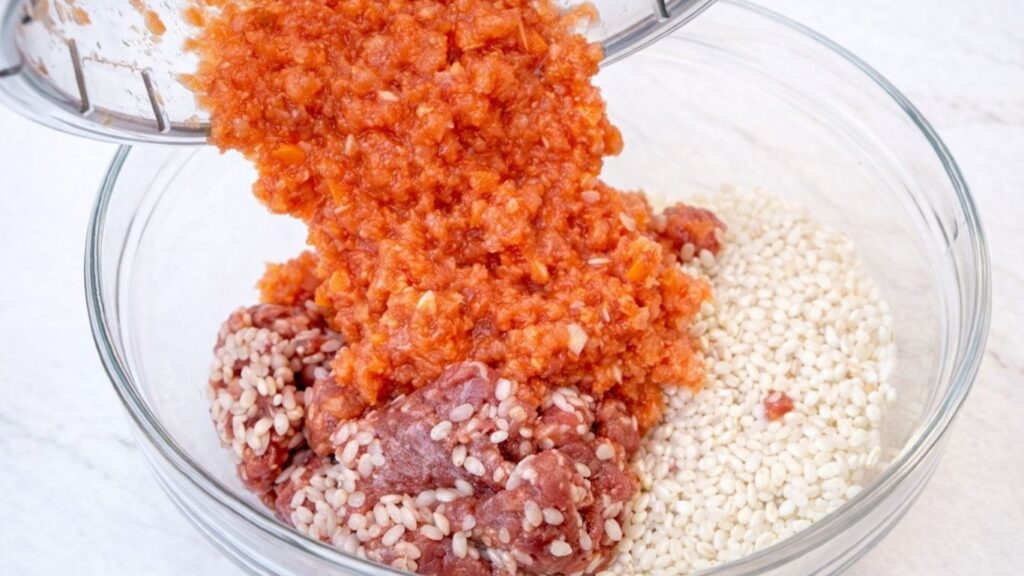
Mix everything together thoroughly until all the ingredients are evenly combined and the mixture becomes slightly sticky and well blended. This helps the filling hold together and ensures that every cabbage roll is juicy, flavorful, and perfectly balanced.
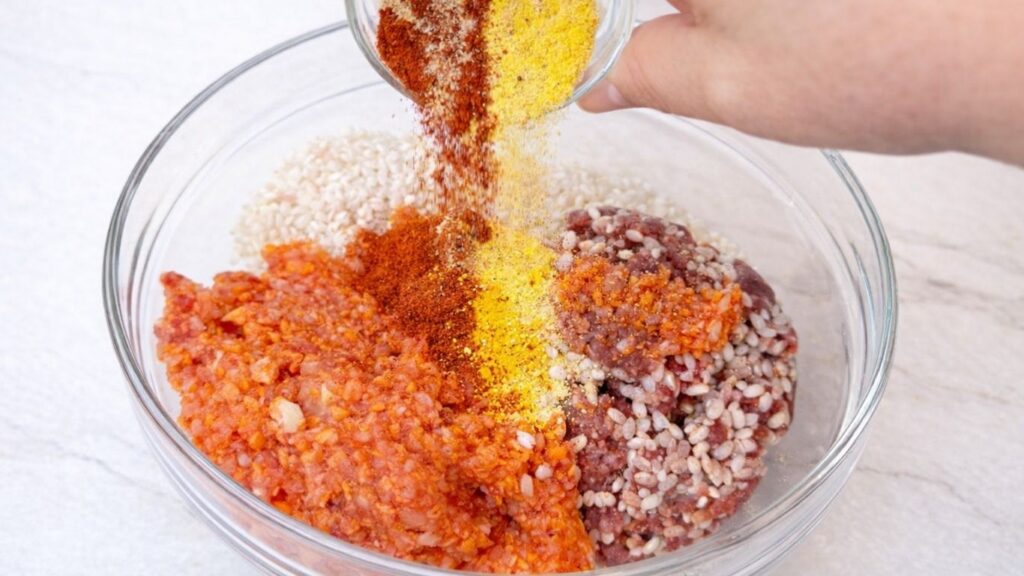
If you prefer a richer, more traditional flavor, you can also add small cubes of smoked or cured meat and gently fold them into the filling for extra depth and a subtle smoky aroma.
4. Roll the Sarma (Stuffed Cabbage Rolls)
Once all your ingredients are prepared, it’s time to start shaping the sarma.
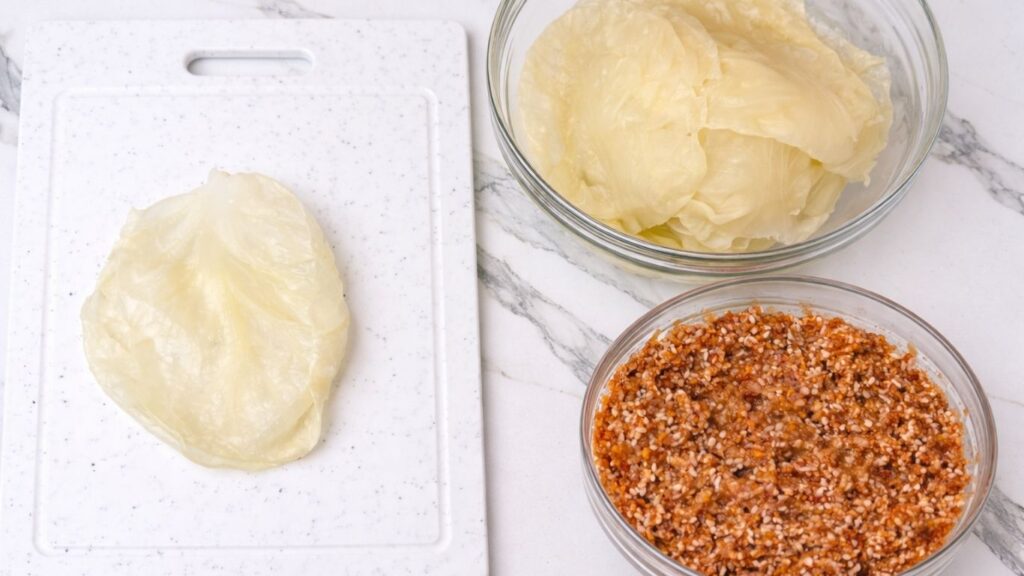
Take one prepared cabbage leaf and place it flat on your work surface, with the smoother side facing down and the trimmed stem end closest to you. This position makes it easier to roll the leaf neatly and evenly.
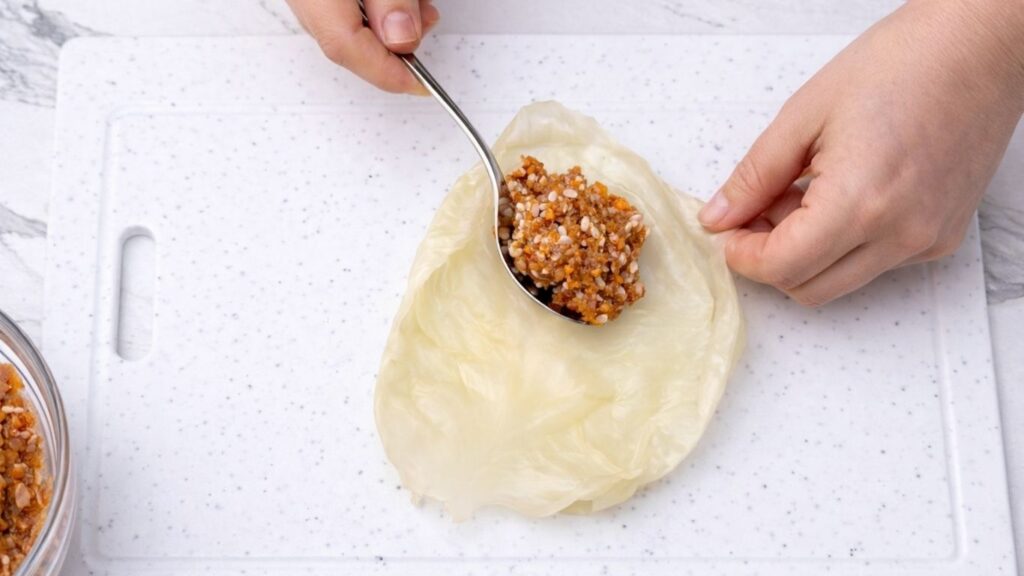
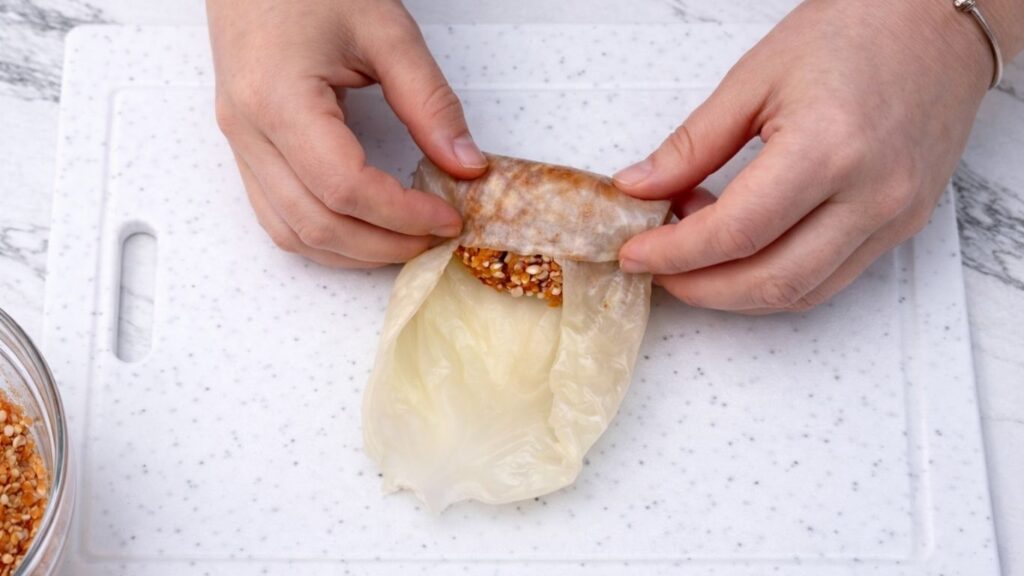
Place a spoonful of the meat and rice filling near the base of the leaf, shaping it into a small log. Be careful not to overfill – just enough so the roll stays compact but not too thick.
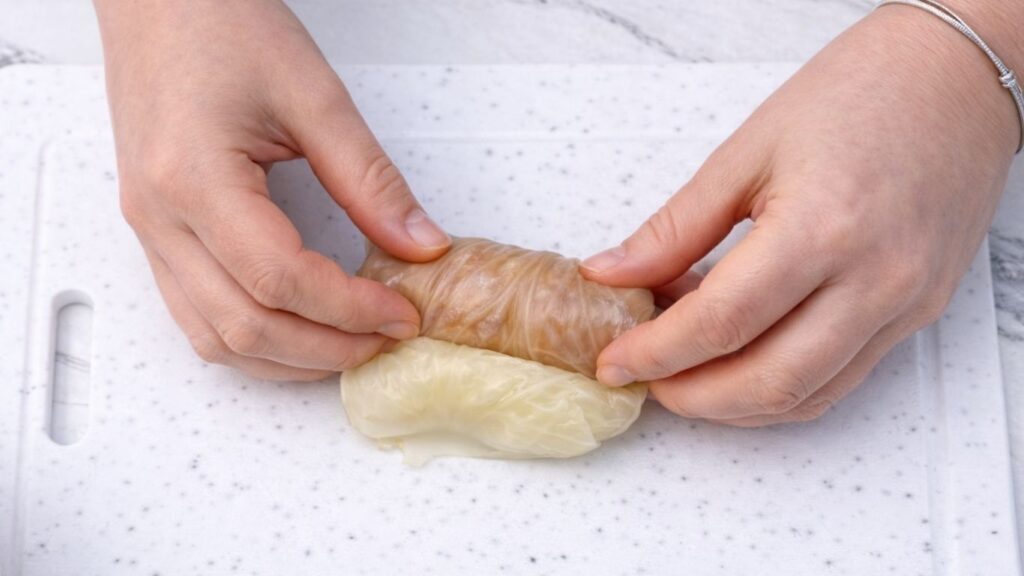
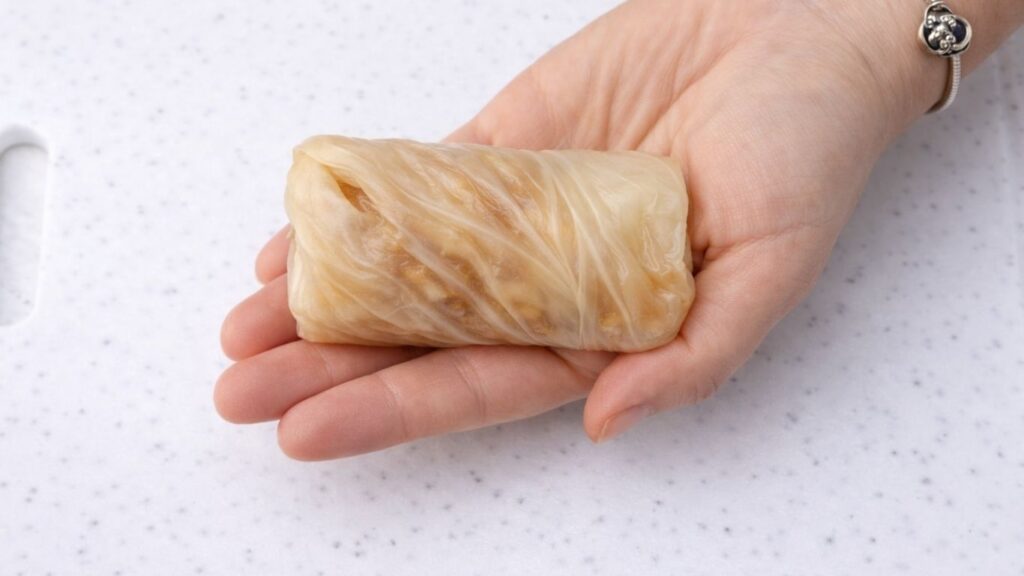
Fold the sides of the cabbage leaf inward over the filling, then gently roll it forward from the base up toward the tip, creating a tight and neat roll. The goal is to keep the filling enclosed so it stays inside during cooking.
Repeat the same process with the remaining leaves and filling, placing each finished roll aside. Try to keep them similar in size so they cook evenly.
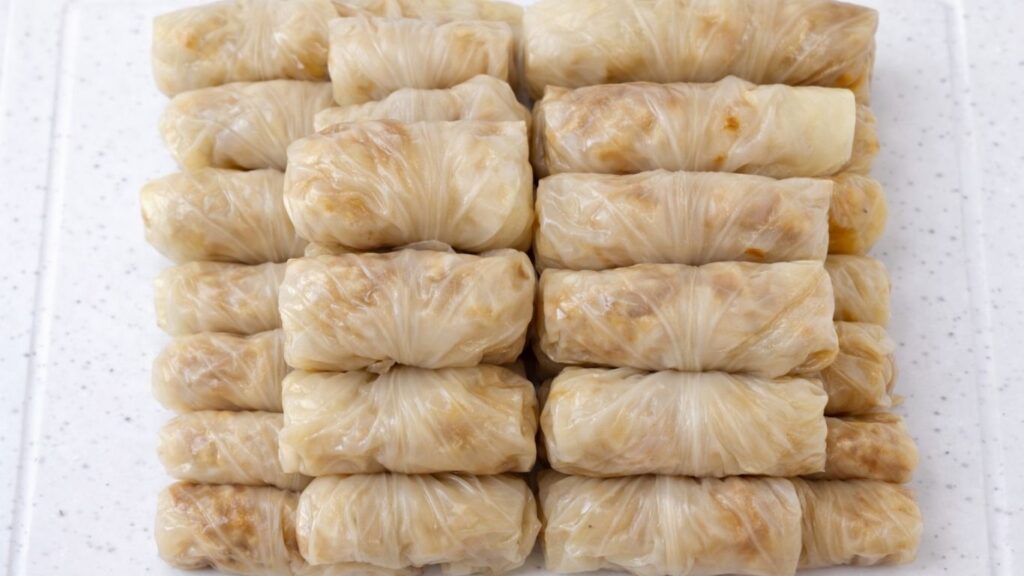
By taking your time with this step and rolling each piece carefully, you’ll get beautiful, evenly shaped sarma that cook perfectly and look lovely when served.

5. Arrange the Sarma in the Pot
Before placing the sarma in the pot, prepare it properly so the rolls cook gently and don’t stick to the bottom.
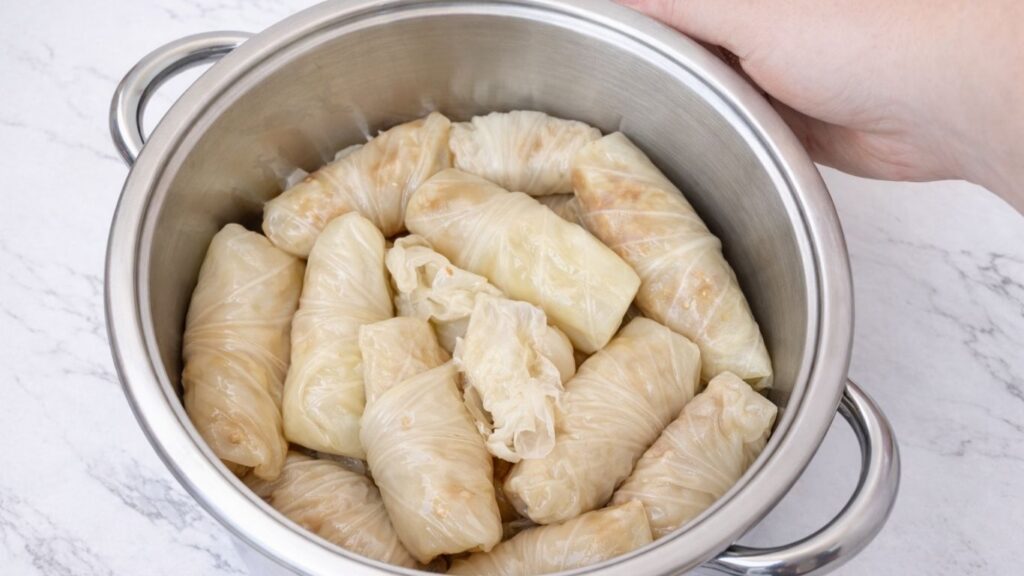
Line the bottom of the pot with a layer of broken cabbage leaves or the smaller inner leaves from the center of the cabbage head. These softer pieces create a protective base that prevents sticking or burning while the sarma slowly cooks.
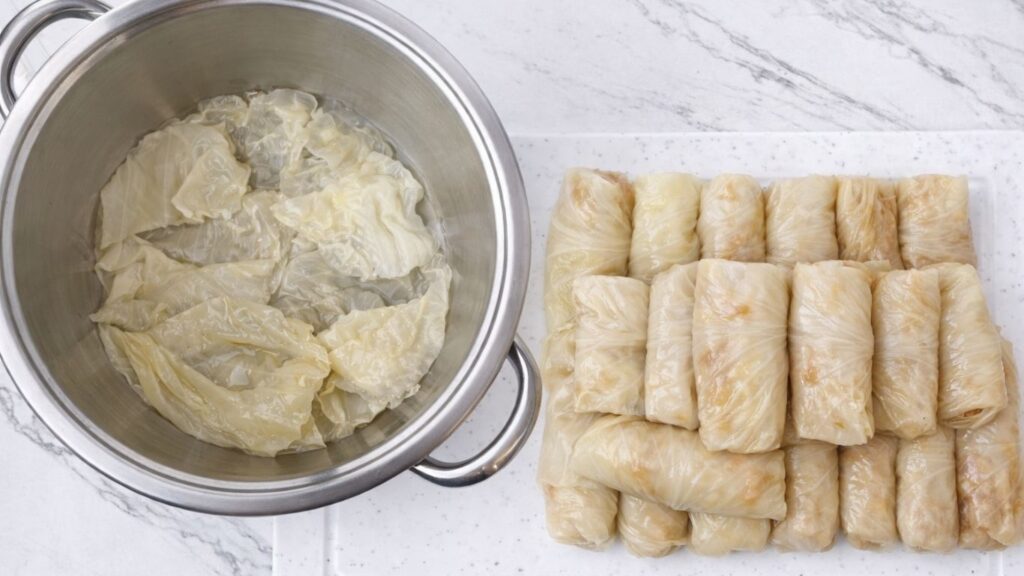
Once the base is prepared, arrange the cabbage rolls one by one in the pot, placing them close together in a neat, compact layer with the seam side facing down. This helps them hold their shape and prevents them from opening during cooking.
Continue layering the sarma in the same way, building a second layer on top if needed, always arranging them snugly so they stay in place.
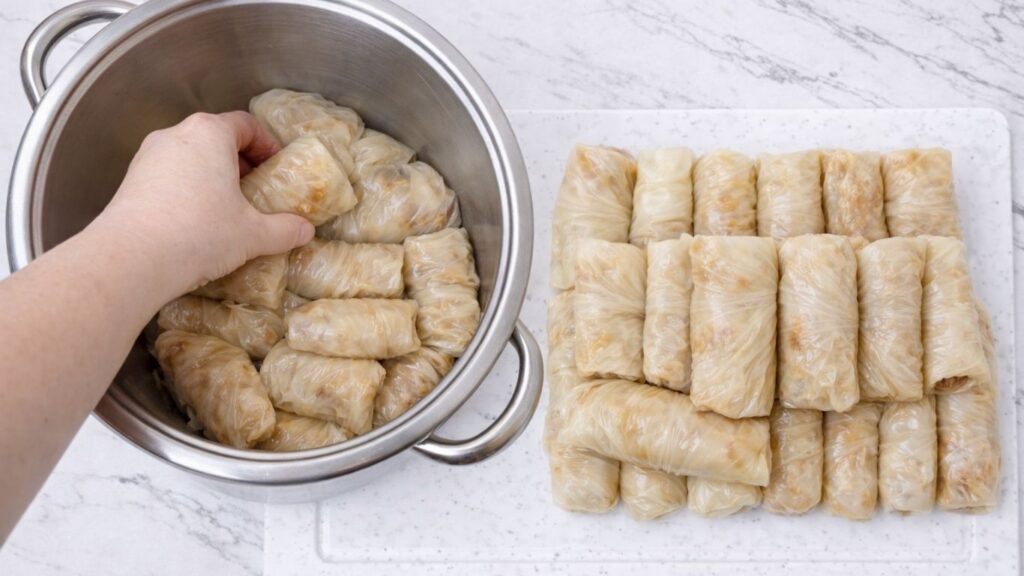
This simple step makes a big difference – it protects the sarma while cooking and adds extra flavor from the cabbage leaves underneath, giving your final dish that rich, traditional homemade taste.
6. Prepare the Cooking Liquid
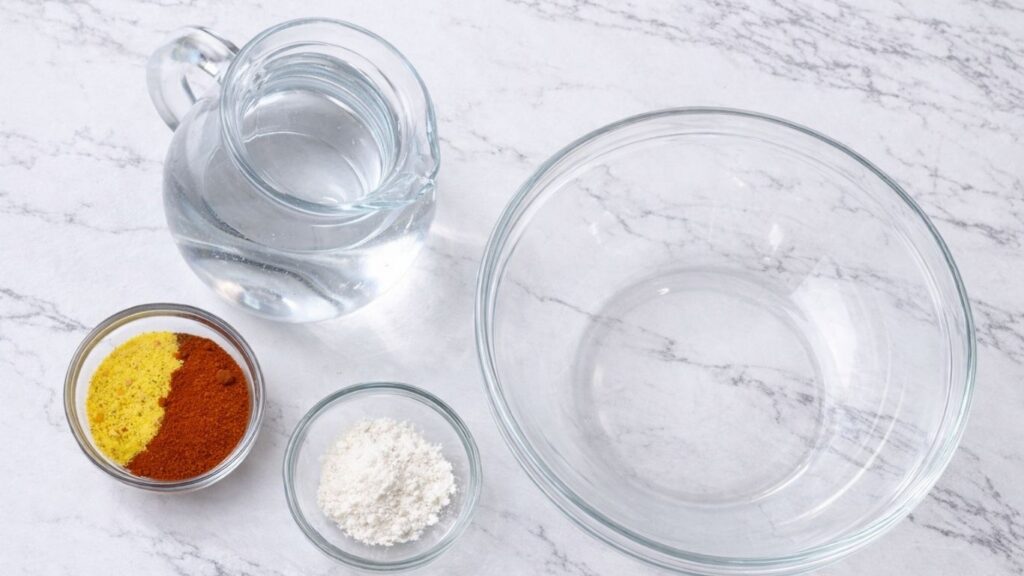
What You Need for the Cooking Liquid
- 2 cups (500 ml) water
- 1 tablespoon cornstarch
- 1 tablespoon sweet paprika (ground)
- Salt, to taste
- Black pepper, to taste
- Mixed seasoning, to taste (optional)
How to Prepare the Cooking Liquid
In a bowl or measuring jug, add the water and season it with salt, black pepper, sweet paprika, and mixed seasoning.
In a small separate bowl, mix the cornstarch with a little cold water until smooth and without lumps. Then add it to the seasoned water and stir everything together well.
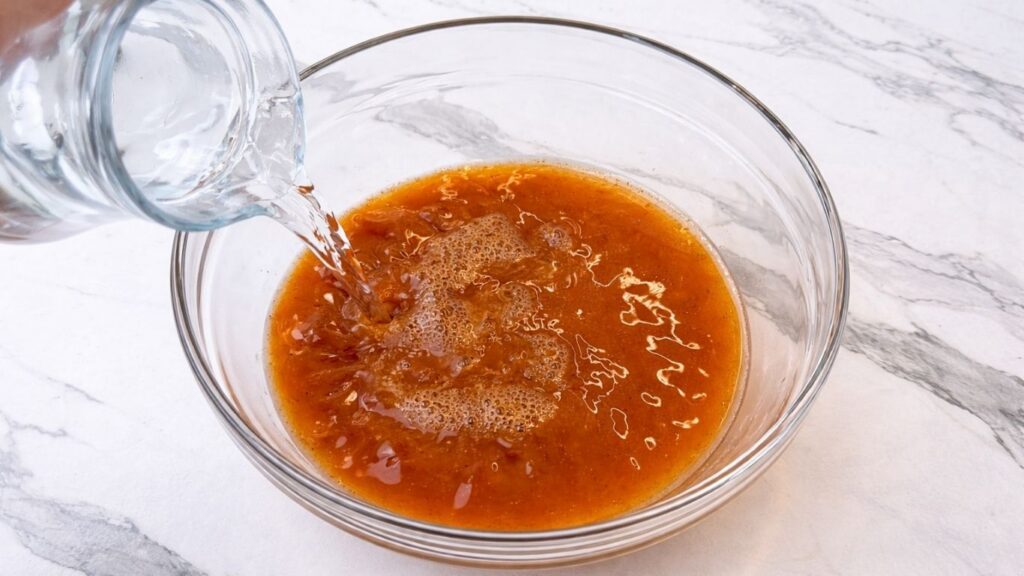
Carefully pour the liquid over the arranged sarma in the pot, making sure they are mostly covered so they can cook slowly and absorb all the flavors.
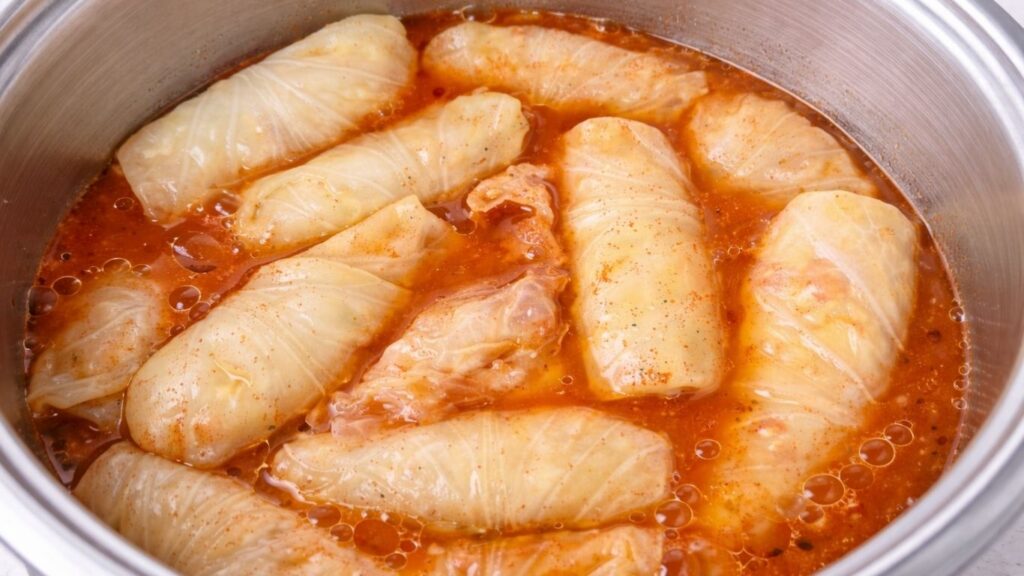
Tip: The cornstarch helps create a light, silky sauce as the sarma cooks, making the dish even more rich and flavorful.
7. Cook the Sarma
Once the sarma are arranged and covered with the cooking liquid, it’s time to let them cook slowly and develop their rich, traditional flavor.
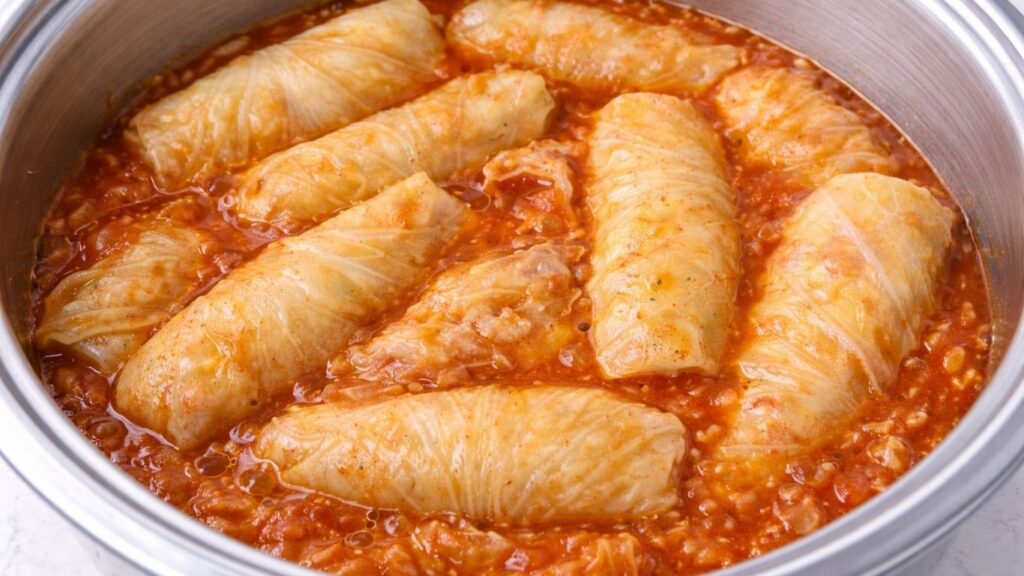
Place the pot on the stove over medium heat and bring everything to a gentle simmer. As soon as it starts to bubble lightly, reduce the heat to low, cover the pot, and let the sarma cook slowly – this gentle process is essential for tender, flavorful rolls.
Allow the sarma to simmer for about 2 hours, or longer if you prefer an even softer texture. During this time, the cabbage will become tender, the rice will cook perfectly, and all the flavors will blend together into a rich, comforting sauce.
While the sarma is cooking, some of the liquid will naturally evaporate. If you notice that the liquid level has reduced too much, add a little more water during cooking, in small amounts, just enough to keep the sarma gently covered so they stay juicy.
Avoid stirring while they cook so the rolls keep their shape. If needed, gently shake the pot to make sure nothing sticks to the bottom.
Slow cooking is the key to perfect sarma – the longer they cook gently, the more tender, flavorful, and delicious they become.
8. Serving & Storage
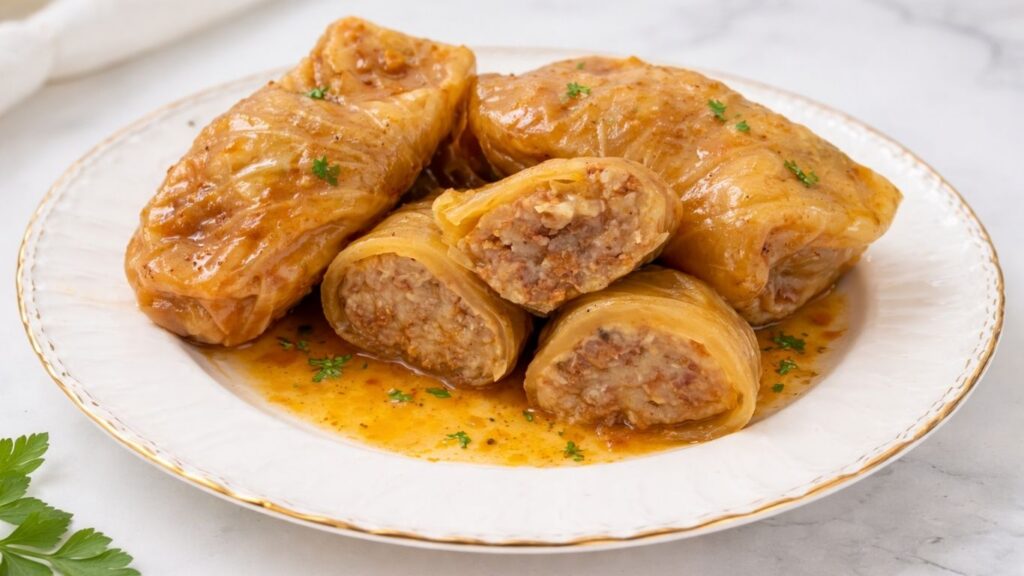
Sarma is best served warm, straight from the pot, when the rolls are tender, juicy, and full of rich, comforting flavor.
You can enjoy it on its own as a complete meal, or serve it with simple sides such as fresh bread, mashed potatoes, or a dollop of sour cream. A slice of homemade bread is perfect for soaking up the delicious sauce.
For an even more traditional experience, serve sarma family-style in the center of the table so everyone can help themselves and enjoy this warm, comforting meal together. You can also serve these stuffed cabbage rolls with my Pretzel Buns for a complete meal.
How to Store Stuffed Cabbage Rolls
Allow the sarma to cool completely, then transfer it to an airtight container and store it in the refrigerator for up to 3-4 days.
Sarma actually tastes even better the next day, as all the flavors have more time to develop and blend together.
Frequently Asked Questions
Can you freeze stuffed cabbage rolls?
Yes, sarma freezes very well and is perfect for meal prep. Once it has cooled completely, place the rolls together with a little of the cooking liquid into airtight, freezer-safe containers or bags. The liquid helps keep the cabbage soft and prevents it from drying out during freezing. Sarma can be stored in the freezer for up to 2-3 months. When you’re ready to enjoy it again, transfer it to the refrigerator and let it thaw slowly overnight.
How do you reheat stuffed cabbage rolls?
You can make sarma ahead of time and reheat it easily when ready to serve. The best way to reheat sarma is slowly and gently on the stove. Place the sarma in a pot, add a small amount of water or a little of the original cooking liquid, cover, and heat over low heat until warmed through.
How long does sarma last in the fridge?
Sarma can be stored in an airtight container in the refrigerator for up to 3-4 days. In fact, many people say sarma tastes even better the next day, because the flavors have more time to blend and develop.
Make sure to store it properly covered and always reheat thoroughly before serving.
Can sarma be made ahead of time?
Yes, sarma is actually one of the best dishes to make ahead. You can prepare it a day in advance and store it in the refrigerator, then simply reheat it when ready to serve.
This resting time allows all the flavors to deepen, making the sarma even more rich, aromatic, and delicious.
Why is my sarma too sour and how can I fix it?
If your sour cabbage is very strong, you can easily balance the flavor by rinsing the cabbage leaves lightly under cold water before using them. This removes some of the excess acidity while still keeping that traditional tangy taste.
You can also add a little more water to the cooking liquid to soften the overall flavor if needed.
Nutrition (Estimated)
Serving size: 1 portion (about 2-3 cabbage rolls)
- Calories: 320-380 kcal
- Protein: 18-22 g
- Carbohydrates: 28-35 g
- Fat: 14-18 g
- Saturated Fat: 4-6 g
- Fiber: 3-5 g
- Sugar: 3-5 g
- Sodium: 700-900 mg
Conclusion
These traditional Stuffed Cabbage Rolls are a comforting and flavorful meal that brings the warmth of Balkan home cooking to the table. Slowly simmering the sarma allows the fermented cabbage, seasoned meat, rice, and smoky flavors to blend beautifully while creating tender, juicy rolls.
Serve them warm with sour cream, mashed potatoes, or crusty bread. They are also perfect for preparing ahead because the flavor becomes even richer the following day.
Happy cooking!

Traditional Stuffed Cabbage Rolls (Sarma Recipe)
Ingredients
Equipment
Method
- Prepare the cabbage leaves: Gently rinse the sour cabbage leaves under cold water if they are especially salty. Carefully separate the leaves and keep them whole. Use a small knife to trim the thick stem at the base of each leaf without cutting through the leaf. Reserve the smaller or torn leaves for lining the pot.
- Prepare the vegetables: Finely chop the onion and garlic, then grate the carrot. Alternatively, pulse the vegetables briefly in a food processor until finely chopped. Avoid blending them into a watery puree.
- Rinse the rice: Place the uncooked rice in a fine-mesh strainer and rinse it under cold water until the water runs mostly clear. Drain thoroughly before adding it to the filling.
- Prepare the filling: Combine the ground meat, rice, onion, carrot, garlic, smoked meat, sweet paprika, salt, black pepper, and optional mixed seasoning in a large bowl. Mix until everything is evenly distributed and the filling holds together. Avoid overmixing.
- Fill the cabbage leaves: Place one cabbage leaf on a clean work surface with the trimmed stem end closest to you. Add a spoonful of filling near the base and shape it into a small log. Do not overfill because the rice will expand during cooking.
- Roll the sarma: Fold both sides of the cabbage leaf inward over the filling. Roll the leaf forward from the base toward the tip, creating a compact roll. Repeat with the remaining leaves and filling.
- Line the pot: Cover the bottom of a large pot with the reserved small or torn cabbage leaves. This prevents the stuffed cabbage rolls from sticking or burning during cooking.
- Arrange the rolls: Place the sarma closely together in the pot with the seam side facing down. Arrange them in a compact layer and add a second layer if necessary.
- Prepare the cornstarch slurry: Measure the water into a large bowl or jug. Remove a few tablespoons of the cold water and mix it with the cornstarch in a small bowl until completely smooth.
- Prepare the cooking liquid: Add the cornstarch slurry to the remaining water. Stir in the sweet paprika, black pepper, salt, and optional mixed seasoning.
- Add the cooking liquid: Carefully pour the seasoned liquid over the stuffed cabbage rolls. They should be mostly covered. Add a little more water if necessary.
- Cook the stuffed cabbage rolls: Place the covered pot over medium heat and bring the liquid to a gentle simmer. Reduce the heat to low and cook for approximately 2 hours, or until the cabbage is tender, the rice is fully cooked, and the meat filling is cooked through.
- Check during cooking: Check the liquid occasionally and add a small amount of hot water if too much has evaporated. Do not stir the cabbage rolls. Gently shake the pot if necessary to prevent sticking.
- Rest and serve: Remove the pot from the heat and let the sarma rest for 10-15 minutes before serving. Serve warm with sour cream, mashed potatoes, or crusty bread.
Notes
- Fermented cabbage varies in saltiness. Rinse the leaves more thoroughly if they taste especially salty.
- Use uncooked rice because it cooks and expands inside the cabbage rolls.
- Do not overfill the leaves, as the expanding rice may cause them to open.
- Add salt carefully when using smoked meat and mixed seasoning.
- Keep the cooking liquid at a gentle simmer. Boiling too strongly can cause the rolls to open.
- If checking with a food thermometer, the center of the meat filling should reach at least 160°F (71°C).
- Sarma often tastes even better the following day after the flavors have had time to develop.
- Store leftovers in an airtight container in the refrigerator for up to 4 days.
- Freeze cooled cabbage rolls with some cooking liquid for up to 3 months. Thaw overnight in the refrigerator and reheat gently.